






Three screens from a live weekly cycle: the staffing console, the demand forecast, and the roster sign-off.
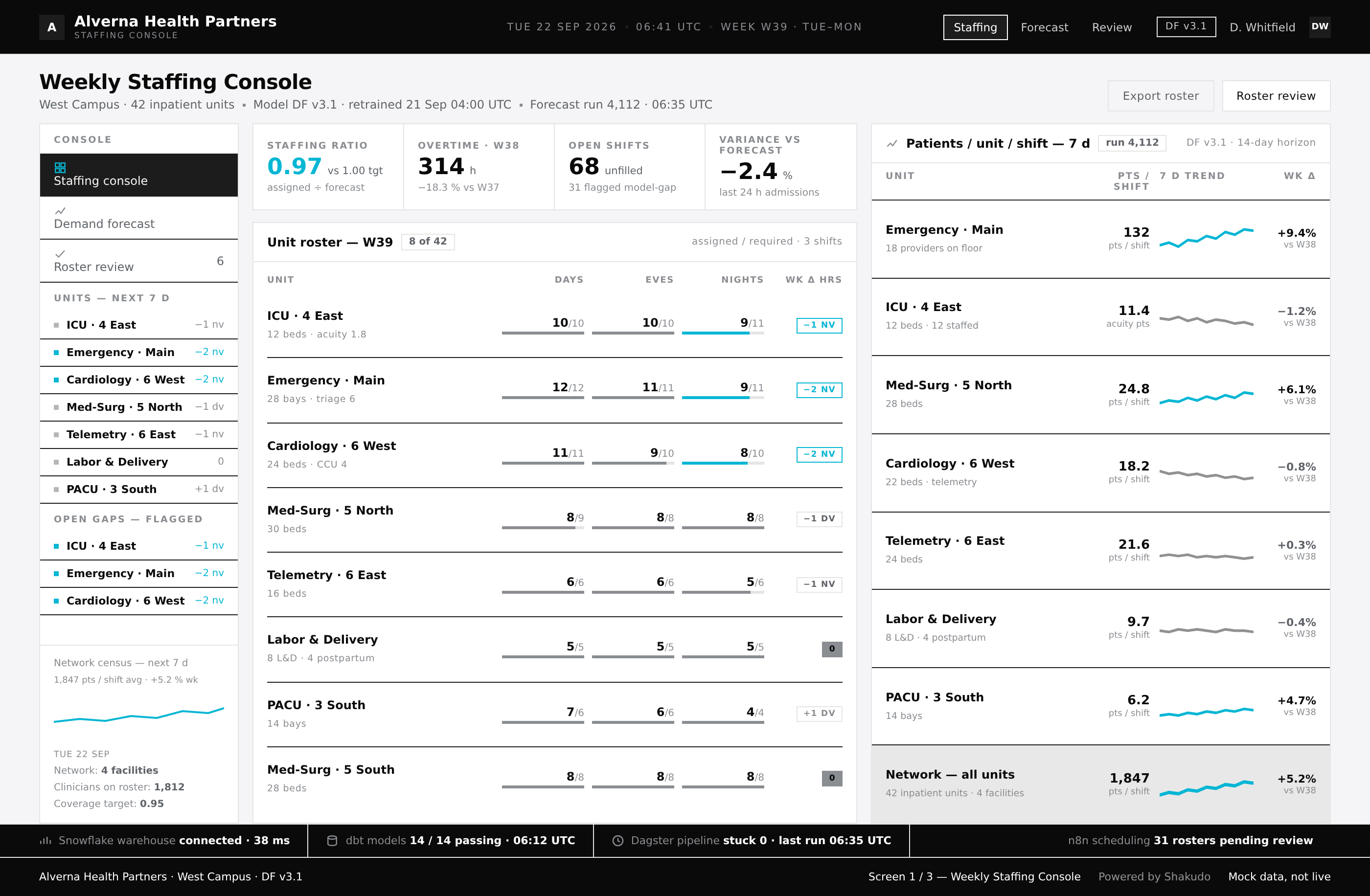
1–2 / 3
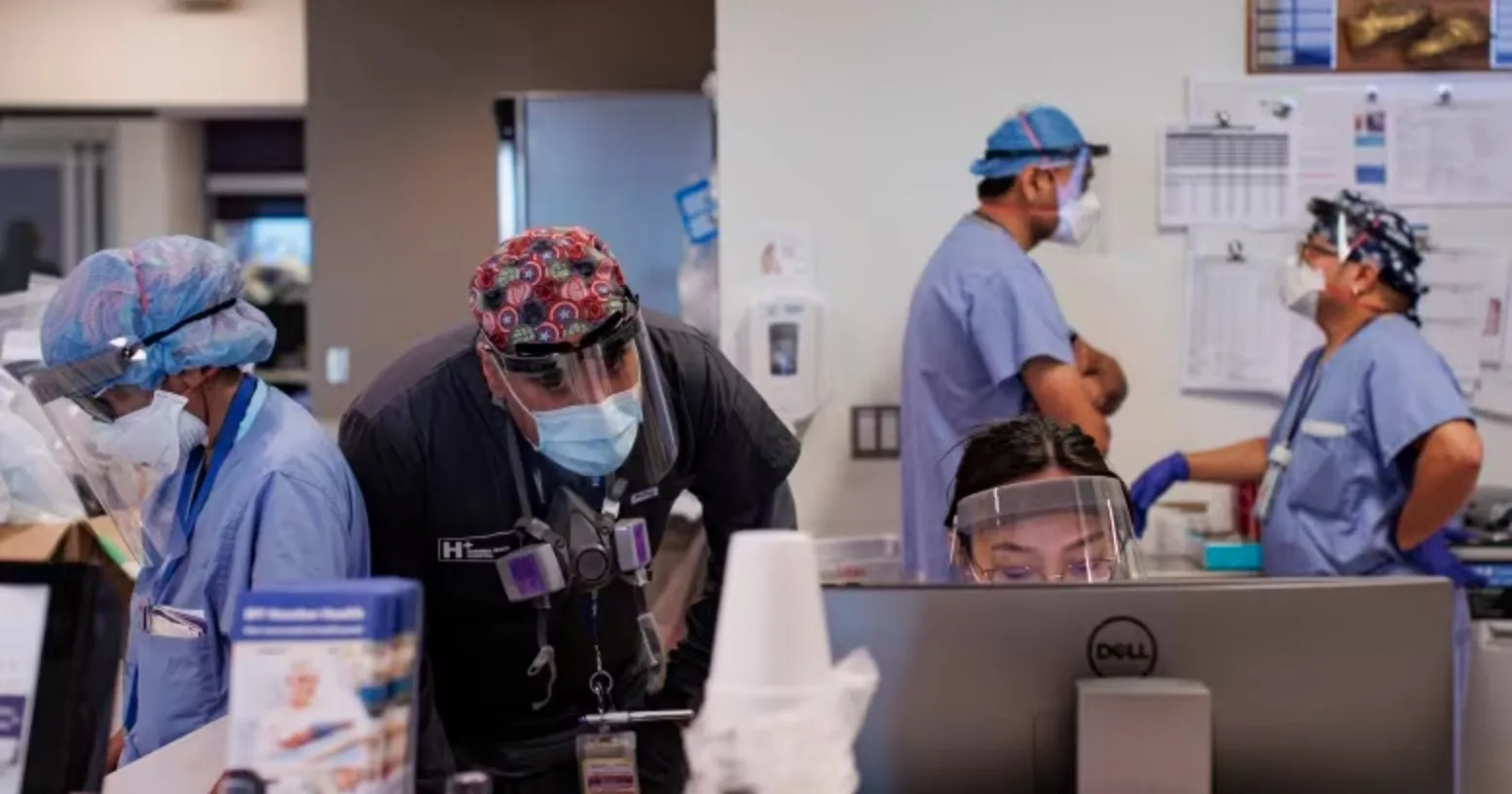
Hospitals run on shifts, and every shift carries a labor cost. Staff too few nurses, physicians, or technicians on a busy night, and coverage gets unsafe and wait times climb. Staff too many, and payroll idles through a quiet morning. The demand a hospital sees is rarely random. It follows admission trends, seasonal illness, local events, and unit-level patterns. Forecasting that demand in advance is the difference between planned care and scramble, and it is the part of staffing that a spreadsheet cannot do.
Demand forecasting at hospital scale is a data problem. It needs admission history, census and acuity data, staffing rosters, and absence and overtime history fused into models that update as the week changes. Building that pipeline from scratch takes a healthcare data team months, and the data has to stay where it belongs, on the hospital's own infrastructure. A dedicated hospital staffing AI stack shortens the build to days, and the forecast runs where the hospital data belongs from the first day.
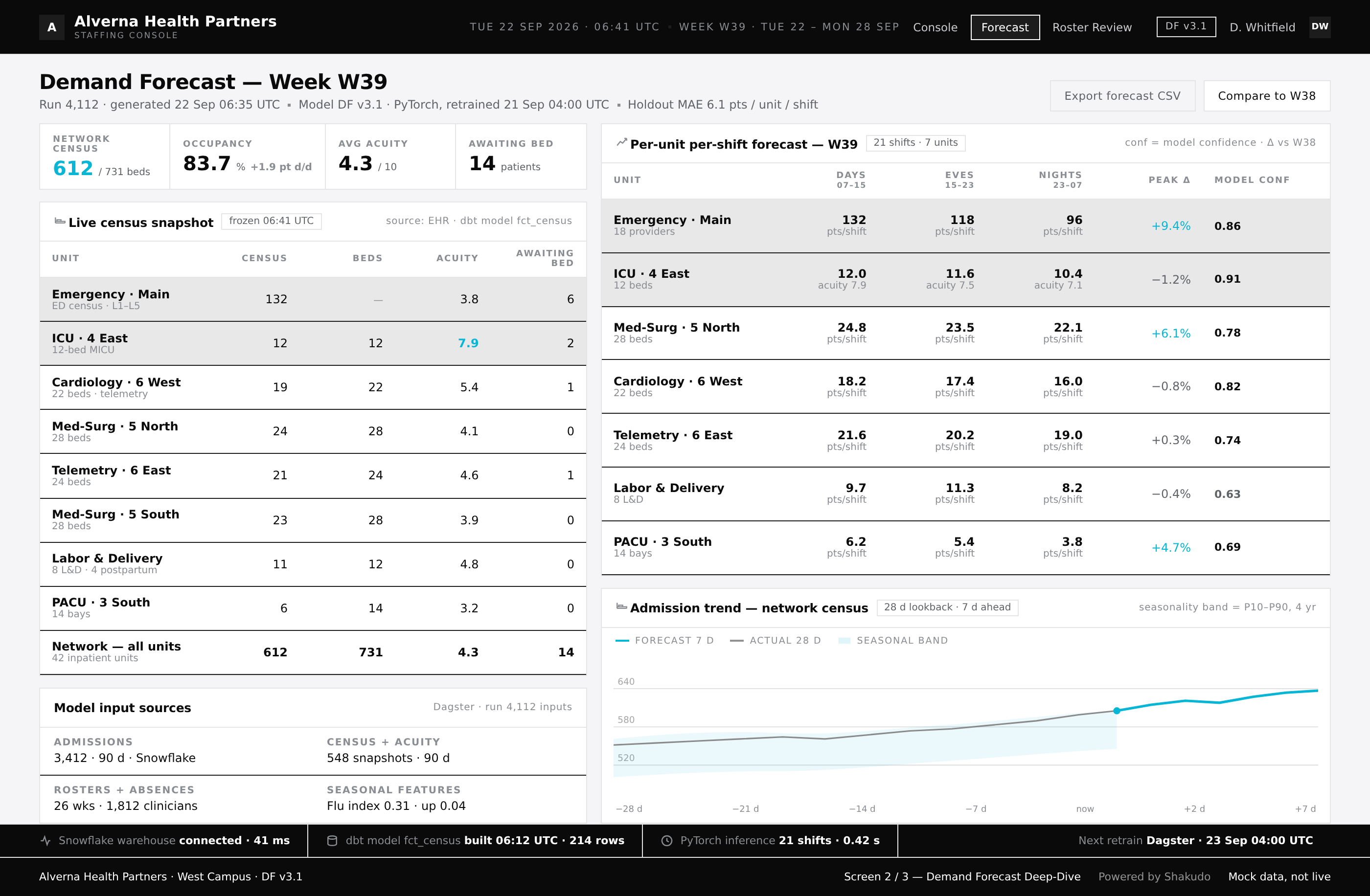
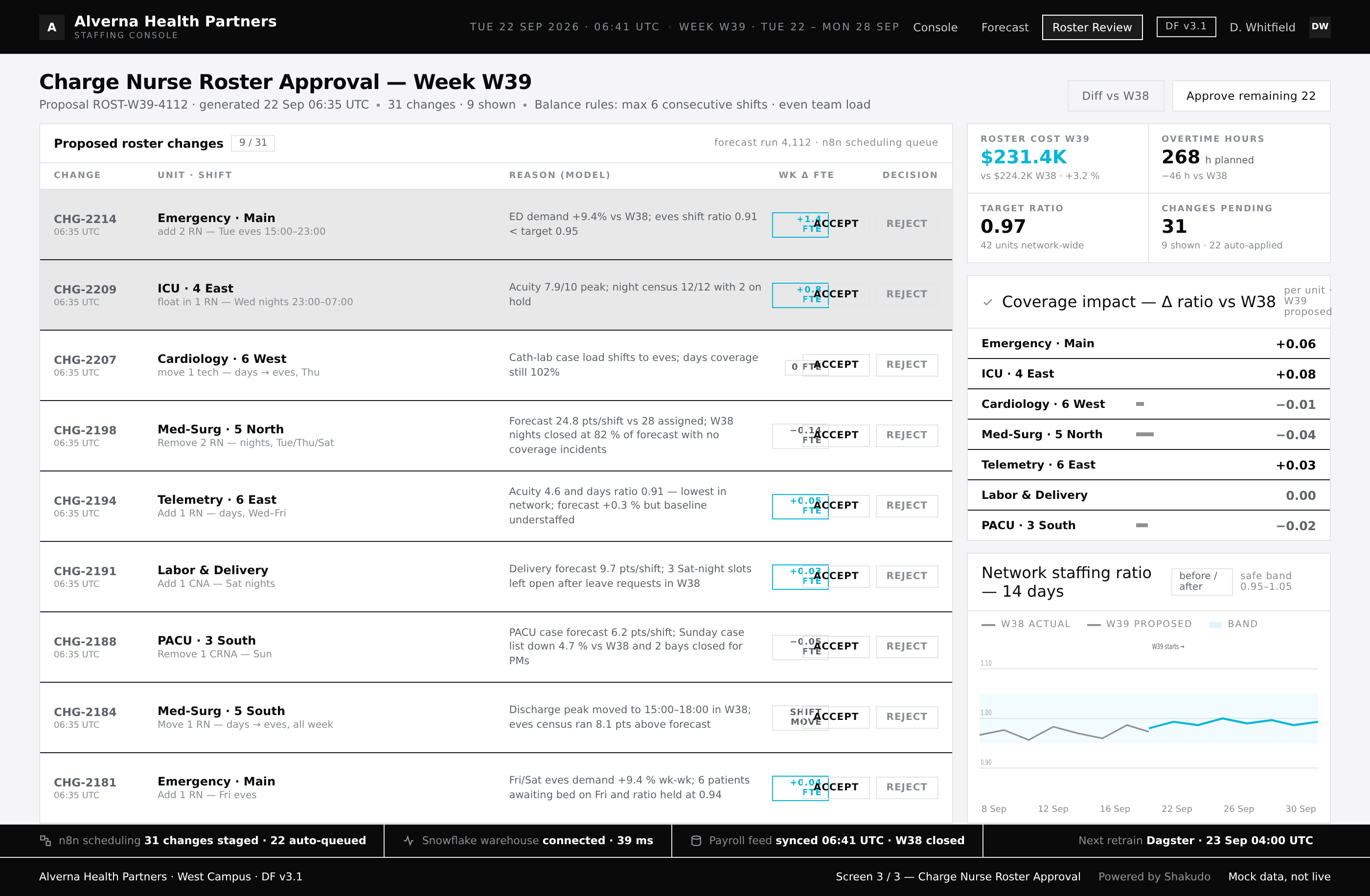
Shakudo deploys an AI demand forecasting system that learns each unit's admission patterns and care requirements. The model predicts patient volume by unit and by shift, and it flags where staffing will fall short or run heavy before the week starts. The scheduling automation then builds rosters from those forecasts, and the operations team reviews a schedule the model has already checked against the expected demand. Coverage during peak demand holds steady, quiet periods stop burning payroll, and wait times trend down as the staff is where the patients are. The charge nurse gets a roster with a reason behind each shift, and the payroll line stops paying for coverage the week did not need.
The system runs entirely on the hospital's own infrastructure. Admission, census, scheduling, and payroll data stay in the hospital's environment and feed the models where they are. That is the standard for patient-adjacent data, and it is why on-premises AI is the workable path here. dbt and Snowflake pull together the admission, census, and staffing sources into one clean model of demand. PyTorch trains the forecasting models on that history, and the models learn the unit-level patterns a generic forecast would miss. Dagster keeps the pipeline running and the models retraining on a schedule the operations team sets. Metabase puts the predictions and staffing performance on a dashboard the operations team checks every morning. n8n executes the scheduling steps the forecast recommends, so the roster the model proposes is the roster the schedule holds.
Hospitals, health systems, and hospital operators where the labor budget is the largest controllable cost and coverage must stay safe. The system suits hospitalist teams, nursing leadership, and operations leaders who want a staffing forecast that respects workload balance across teams, and a scheduling process that follows the data. It fits the hospital that has a real admission and staffing history behind it, because the model learns from that history and gets sharper with every unit it covers. It runs on the hospital's own infrastructure, where patient-adjacent data belongs.
It is a system that predicts patient volume and care demand by unit and by shift, then aligns staffing to that prediction. The forecast learns from the hospital's own admission history, census, and acuity data. It refreshes as the week changes, so the roster tracks the demand the hospital is about to see. Coverage holds at peak, and payroll holds during quiet periods. The operations team reads the prediction and the actual coverage on one dashboard, and the next roster starts from the model's read of the week ahead.
The scheduling automation can. The forecast sets the required coverage, and the scheduling workflow distributes shifts against that coverage while applying balance rules the hospital sets, such as caps on consecutive shifts and an even distribution across teams. The fairness constraints live in the workflow, so the balance holds by design. The dashboard shows how each team's load compares week to week, and the operations team can see where the balance moved and why.
On the hospital's own infrastructure. Admission, census, and scheduling data stay in the hospital's environment and feed the models where they are. Nothing is sent to an external AI vendor, which is what makes the system workable with patient-adjacent data. The model the hospital works from is one it owns, and it re-trains on the hospital's own history as that history grows.
For hospital operations, that means a schedule that matches the week's real demand from the first shift of the month. Book a demo and see AI demand forecasting turn staffing plans into coverage the operations team can stand behind.
Shakudo's AI-driven hospital staffing optimization solution revolutionizes workforce management in healthcare settings. By integrating advanced machine learning algorithms with comprehensive healthcare data, this solution accurately predicts patient influx and care demands across various departments. Shakudo uniquely enables rapid deployment and seamless integration of these sophisticated forecasting tools within existing hospital management systems, empowering healthcare providers to optimize staffing levels dynamically.










"What drew me in is simple. When developers ship production-ready code this quickly, how can I have environments spun up fast enough? Shakudo is how we close that gap."



"Shakudo does not just provide the platform. It is a real partnership. They are always there to help and execute our vision faster and the right way. It is like a co-team working together to achieve our goals."