






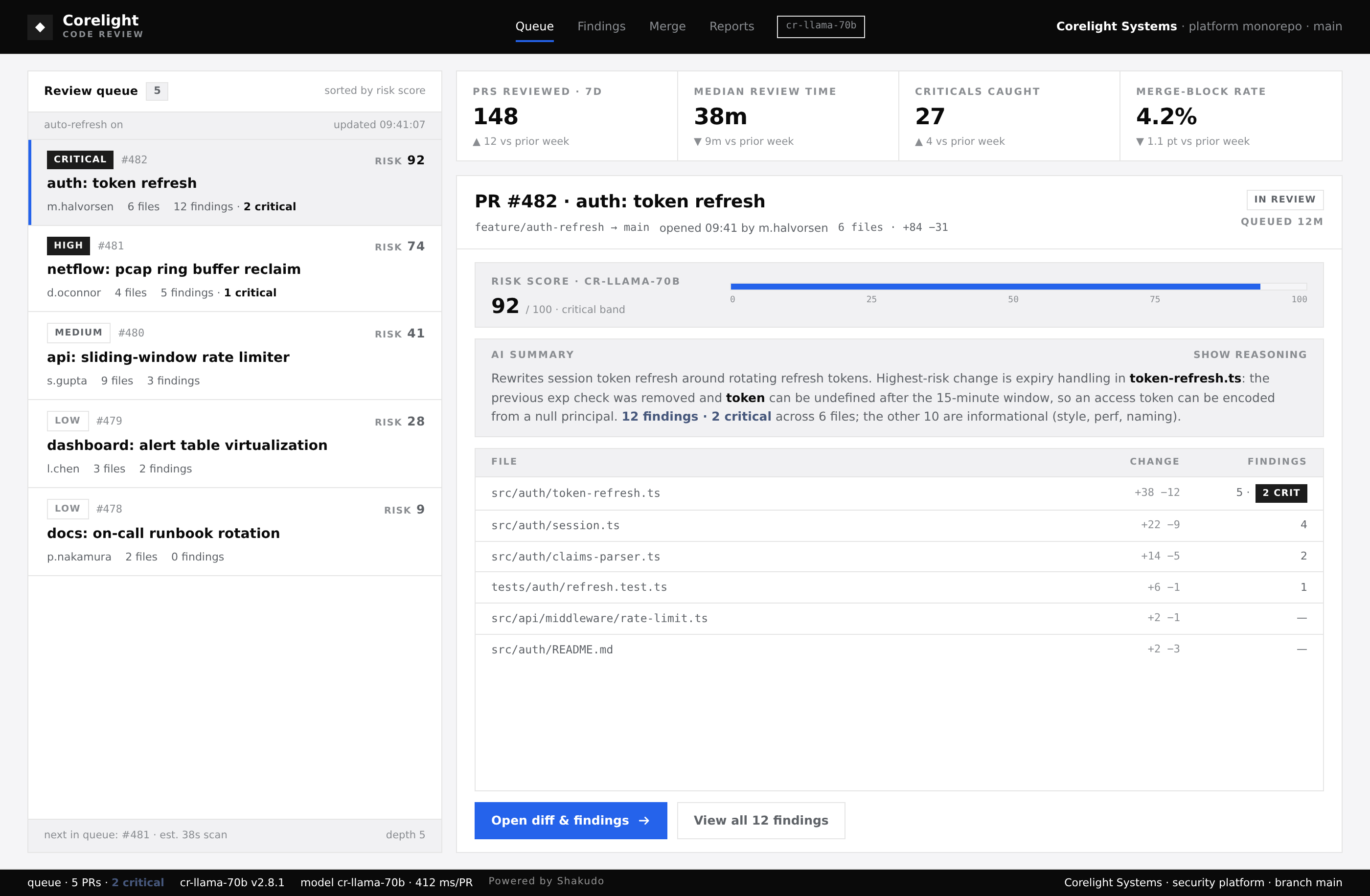
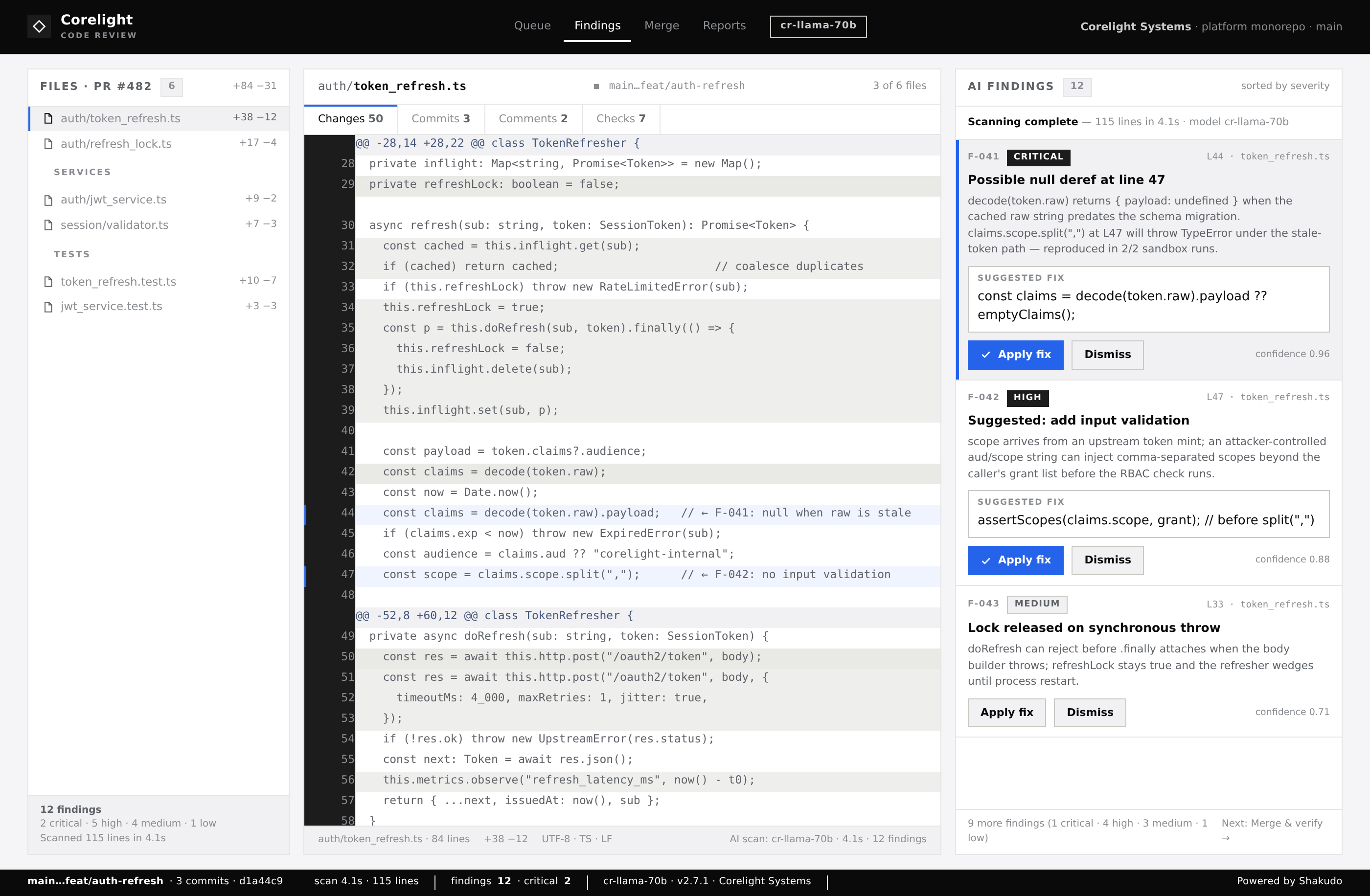
Three screens from a live run: the review queue, the AI findings on a diff, and resolve & merge.
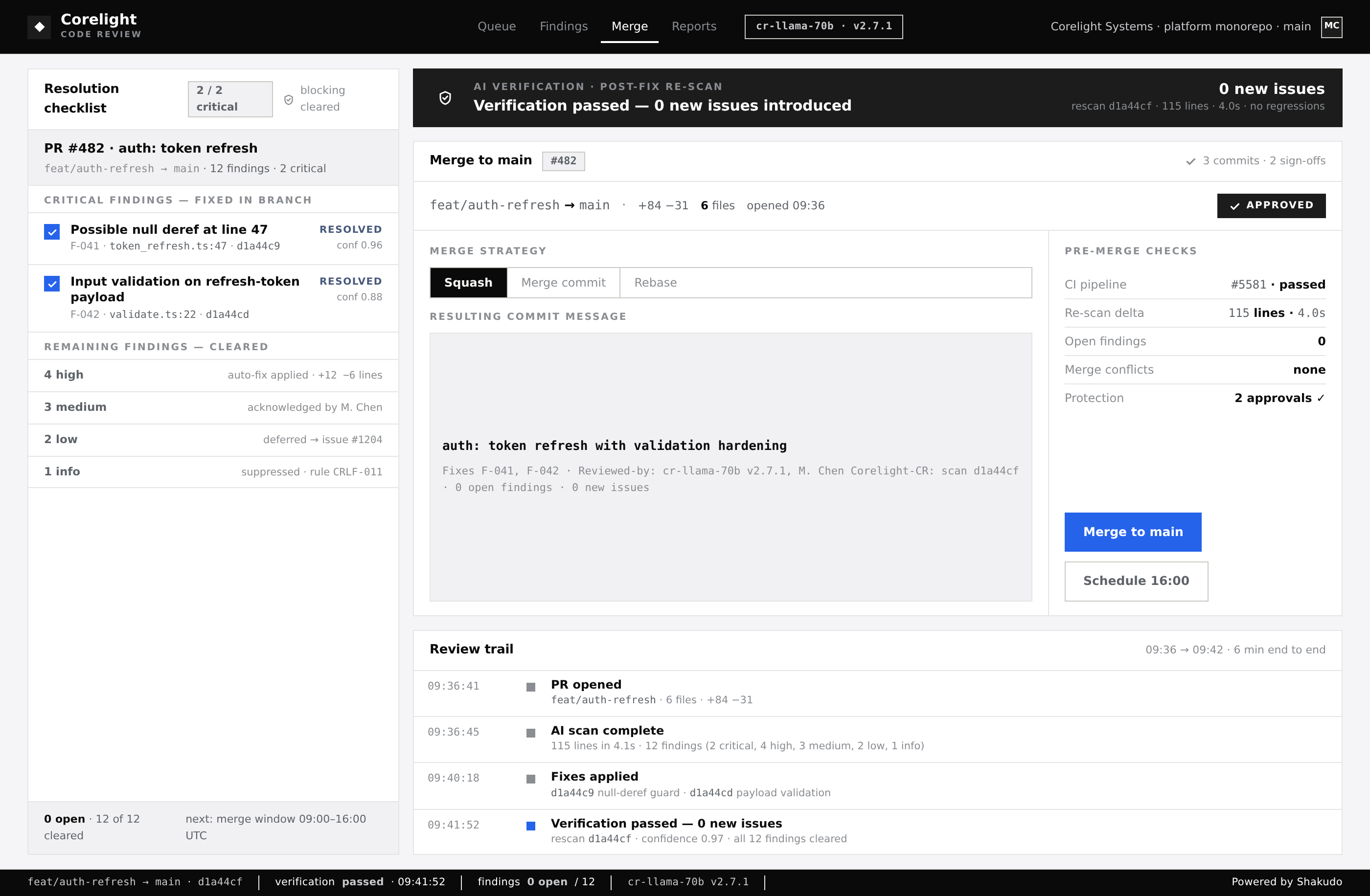
1–2 / 3
Every pull request is a queue. A developer opens the change, reviewers check in when they can, and the merge waits on a second pair of eyes. The review queue grows with the team, and code quality depends on the reviewer who happens to be free that day.
AI code review removes the wait. A large language model reads the change the moment it is pushed, checks it against the codebase it already knows, and returns comments that address syntax, logic, and security in the same pass. Review time drops from hours to minutes, and the same checks run on every pull request, every time, from the first commit to the release candidate.
Shakudo deploys an AI code review agent inside the GitLab workflow the team already runs. Llama 3 reviews each pull request for syntax problems, logic errors, and risky patterns, and posts its findings where the team reads code reviews. FastAPI serves the review requests and delivers the AI insights instantly. MongoDB keeps the review history and the organization's coding patterns, so the model gets better with every pull request. Trivy scans for security vulnerabilities in the code and the dependencies it pulls in, and Prometheus monitors the service that runs the reviews. The result is fewer bugs caught late, more maintainable code, and a shorter path from commit to production. The review comments land in the GitLab thread the team already reads, so nothing about the workflow changes.
The AI model runs in the customer's environment, so source code stays where it already is. That matters for product code, where every line is competitive property, and for teams that cannot route uncommitted code through a third-party service. The agent connects to GitLab, reads the diff and the surrounding codebase, and generates context-aware suggestions across the programming languages the team writes in. Security and performance checks run on the same pass, so reliability does not trade against speed. The model belongs to the customer and can be retrained as the codebase evolves.
Engineering and platform teams that ship frequently and want AI to carry the first pass of code review. Software houses, product engineering groups, and in-house platform teams fit best. The review runs on the customer's infrastructure, which makes it a natural fit for teams with source code that cannot leave the environment.
The model reviews the pull request against the surrounding codebase it can already read, with full context around the diff. Context-aware suggestions address syntax and logic in the same pass, so the review reflects how the team actually writes code. MongoDB keeps the codebase context and review history, so the checks improve as the team ships.
Yes. Trivy scans the code and its dependencies for known vulnerabilities as part of the same pass, and the AI model flags risky patterns in the change itself. The review covers security alongside syntax and logic, so one review pass does double duty.
Shakudo brings the full stack, from model to GitLab integration, up and running in days. The GitLab trigger, the Llama 3 model, the storage, and the monitoring arrive as one working system, so the first automated review lands the same week the platform does.
For engineering teams that review code by hand on every pull request, AI code review moves that first pass to minutes and frees the team for the changes that need a human. Book a demo and see the review pipeline run on a real repository.
Shakudo revolutionizes the software development lifecycle by integrating AI-powered code review capabilities. This solution leverages advanced machine learning models to automatically analyze code, identify potential issues, and suggest improvements. By providing a seamless platform for deploying and managing these AI tools within existing development workflows, Shakudo empowers organizations to significantly enhance code quality, reduce technical debt, and accelerate the development process.










"What drew me in is simple. When developers ship production-ready code this quickly, how can I have environments spun up fast enough? Shakudo is how we close that gap."



"Shakudo does not just provide the platform. It is a real partnership. They are always there to help and execute our vision faster and the right way. It is like a co-team working together to achieve our goals."