






Three screens from a live valuation run: the portfolio queue, the AI market analysis, and the human sign-off.
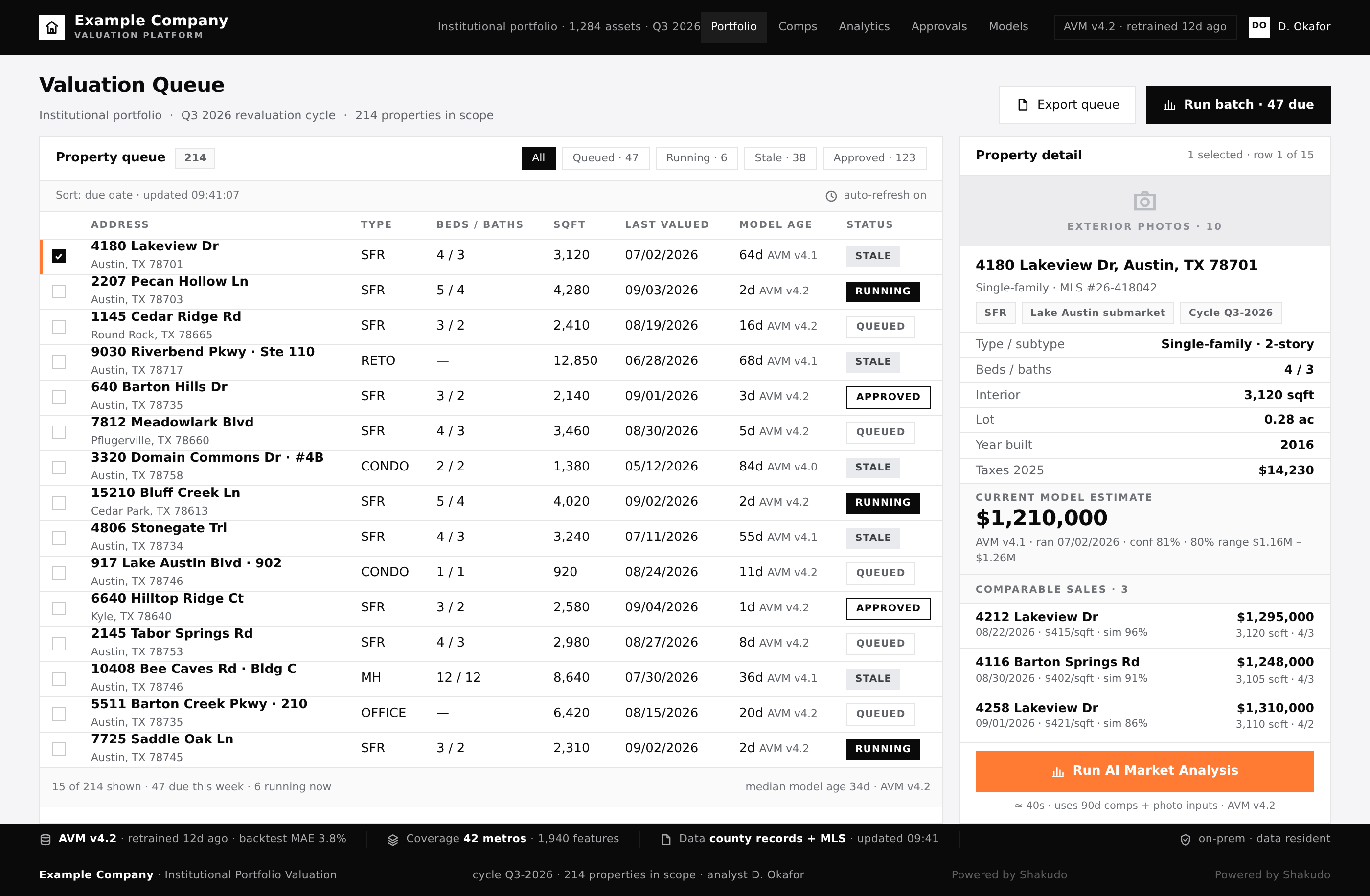
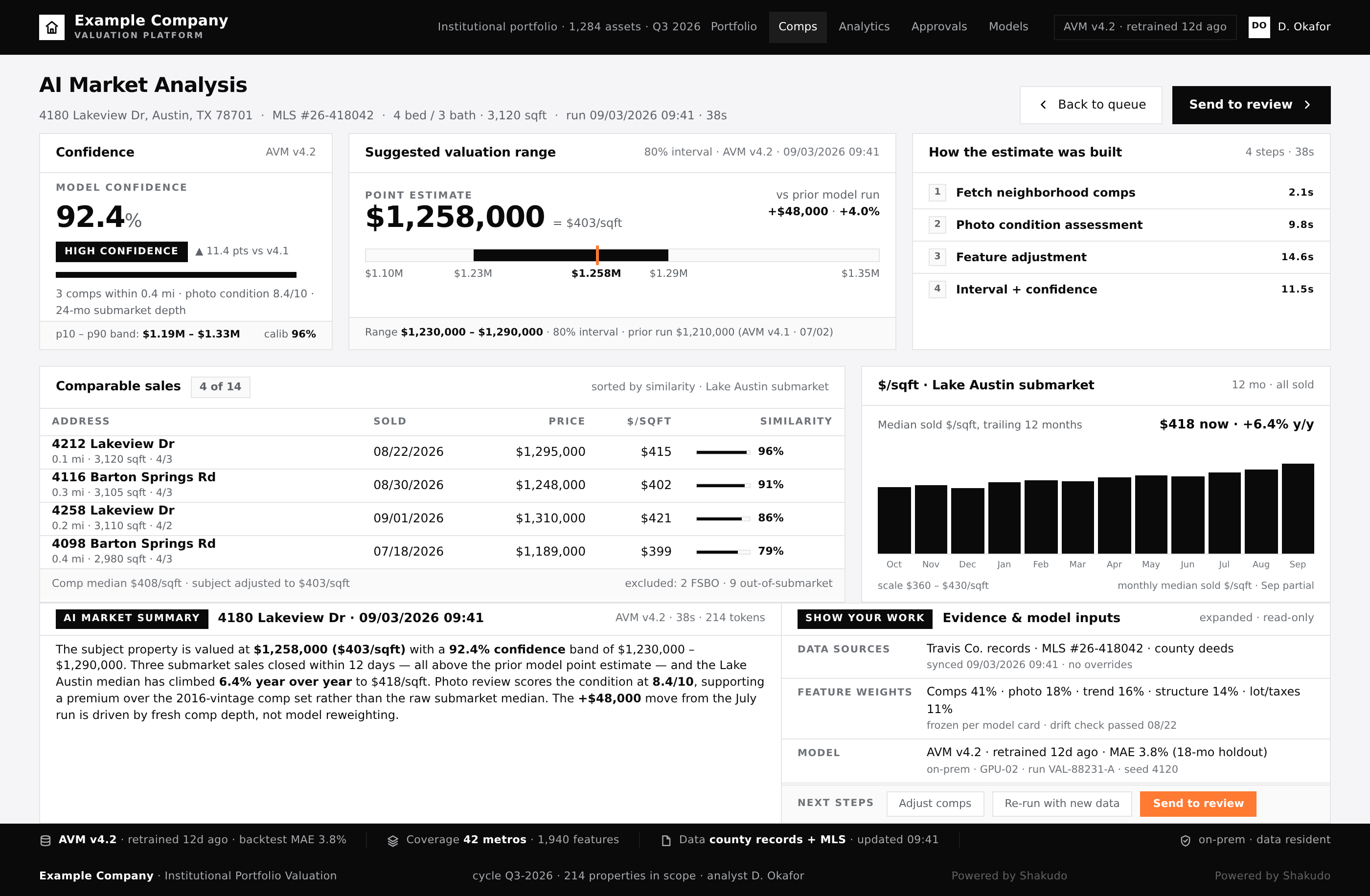
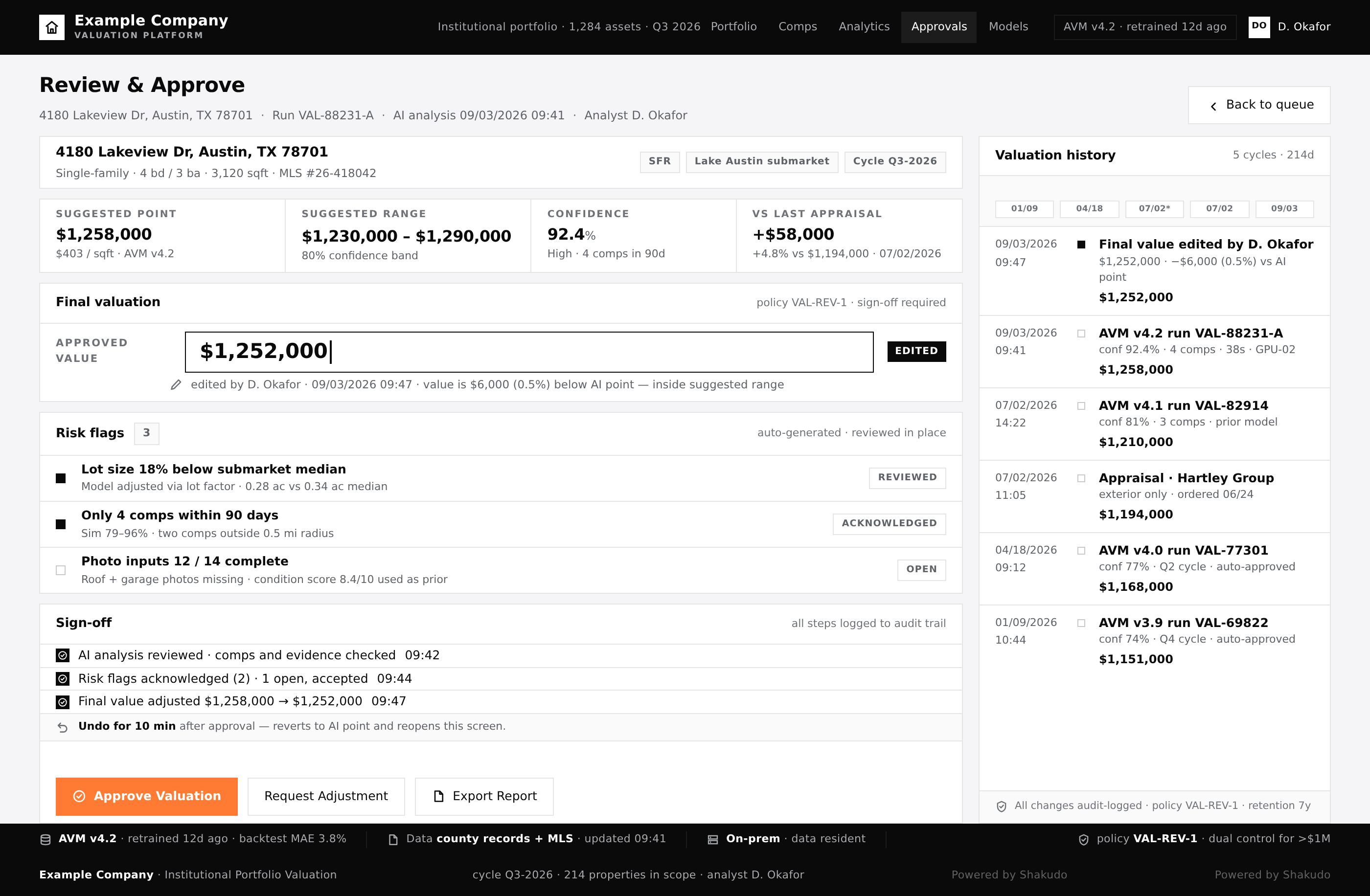
1–2 / 3
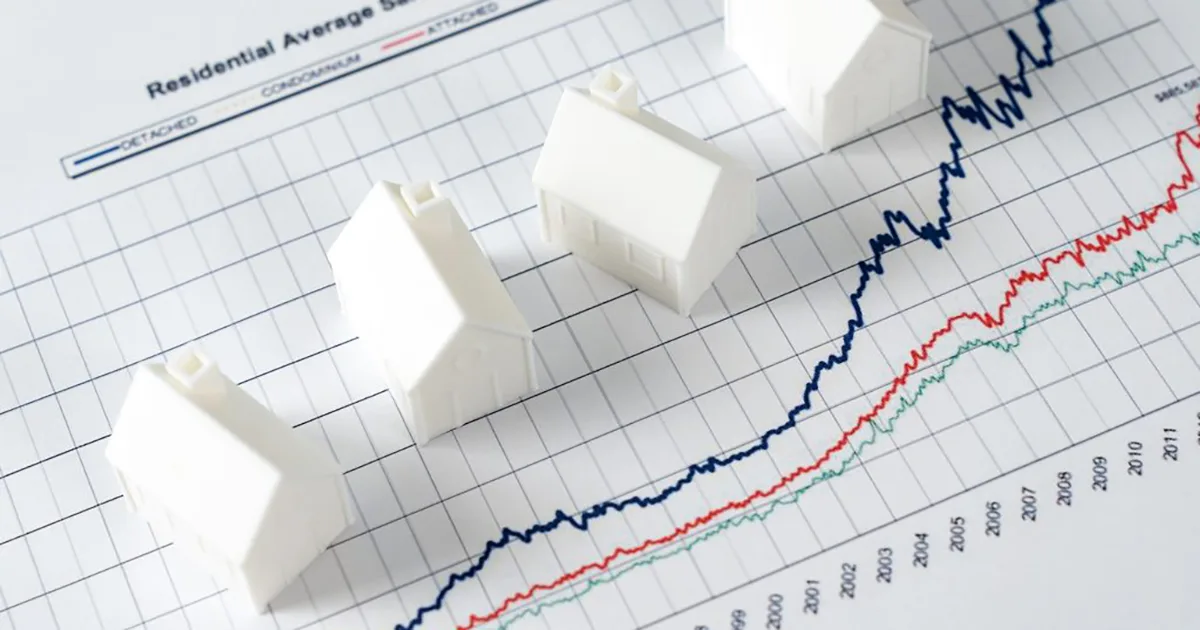
Property values move at the pace of the market, but most valuation processes still run on quarterly reports, manual comps, and spreadsheet models that lag behind current conditions. At portfolio scale, that lag is a pricing error: overpriced assets, missed acquisitions, and underwriting decisions built on stale numbers. This is the problem that AI property analysis and AI real estate market analysis are being adopted to solve.
Real estate market analysis used to be a periodic exercise. A portfolio is revalued a few times a year, comparable sales are gathered by hand, and trend judgments are made from trailing indicators. Markets now shift faster than that cycle. Interest rate changes, new development pipelines, and localized demand shifts can move value drivers between quarterly reviews. Teams that price on last quarter's data absorb the difference directly, in acquisition cost, exit timing, or underwriting error.
Shakudo deploys a property value prediction and market analysis system inside your environment. The system delivers:
The output feeds the tools your teams already use: portfolio dashboards, underwriting workflows, and acquisition analysis.
The system ingests your existing data sources: transaction history, property attributes, market feeds, and economic indicators. Machine learning models are trained and backtested against your historical transactions before they go into production. A model lifecycle process then keeps them current: versions are tracked, drift is monitored, and models are retrained on a regular cadence with new transaction data. The result is a property valuation model that reflects the market as it is today. Valuation output is delivered as a service that your internal tools consume, and the model is yours, running in your environment.
Third-party valuation tools require you to send your transaction data and market data to an external vendor, then accept their model, their cadence, and their governance. With an in-house property valuation model, your transaction data, market data, and valuation model never leave your environment, under your own data governance and privacy requirements. The system is also a real platform: the pipelines, models, and monitoring keep running after the engagement that built it ends. The same architecture runs at production volume for institutions like Gallo, a global winery that runs its operations on Shakudo.
The system serves portfolio valuation teams at REITs and institutional investors, data and analytics teams at large brokerages, lenders building internal AVMs for underwriting, and developers analyzing market trends for acquisition decisions. It is also the build-versus-buy alternative to buying a SaaS valuation seat: if your data governance, portfolio shape, or market segments are specific enough that a generic model falls short, an in-house model is the durable option.
Accuracy depends on data quality and model lifecycle. A model trained on your own transaction history, benchmarked against your historical deals, and retrained as the market shifts will stay accurate longer than a generic model that is updated on someone else's cadence.
A property value trend predictor tool uses market data, transaction history, and economic indicators to forecast where property values are heading over a forward-looking period. It is distinct from a current-value AVM, which estimates what a property is worth today.
Through the retraining loop. New transaction data feeds back into the model on a regular cadence, so the model reflects the current market rather than the market from months ago, and drift monitoring flags when a retrain is needed earlier.
A third-party AVM uses public data and a generic model. An in-house model is trained on your own transaction history and market data, reflects your portfolio, your market segments, and your underwriting criteria, and stays under your data governance.
Yes. The platform runs entirely inside the customer's own environment. Shakudo engineers the pipelines, models, and lifecycle process with your team, and your data team can operate the system independently after the engagement.
If your team is weighing build versus buy for valuation infrastructure, request pricing and scope for an in-house property valuation system.
Shakudo's AI-driven property valuation solution revolutionizes real estate market analysis and pricing strategies. By integrating advanced machine learning algorithms with comprehensive property and market data, this solution accurately predicts property values based on a multitude of factors including location, property features, market trends, and economic indicators. Shakudo uniquely enables rapid deployment and seamless integration of these sophisticated valuation tools within existing real estate platforms, empowering professionals to make data-driven decisions with unprecedented accuracy.










"What drew me in is simple. When developers ship production-ready code this quickly, how can I have environments spun up fast enough? Shakudo is how we close that gap."



"Shakudo does not just provide the platform. It is a real partnership. They are always there to help and execute our vision faster and the right way. It is like a co-team working together to achieve our goals."