






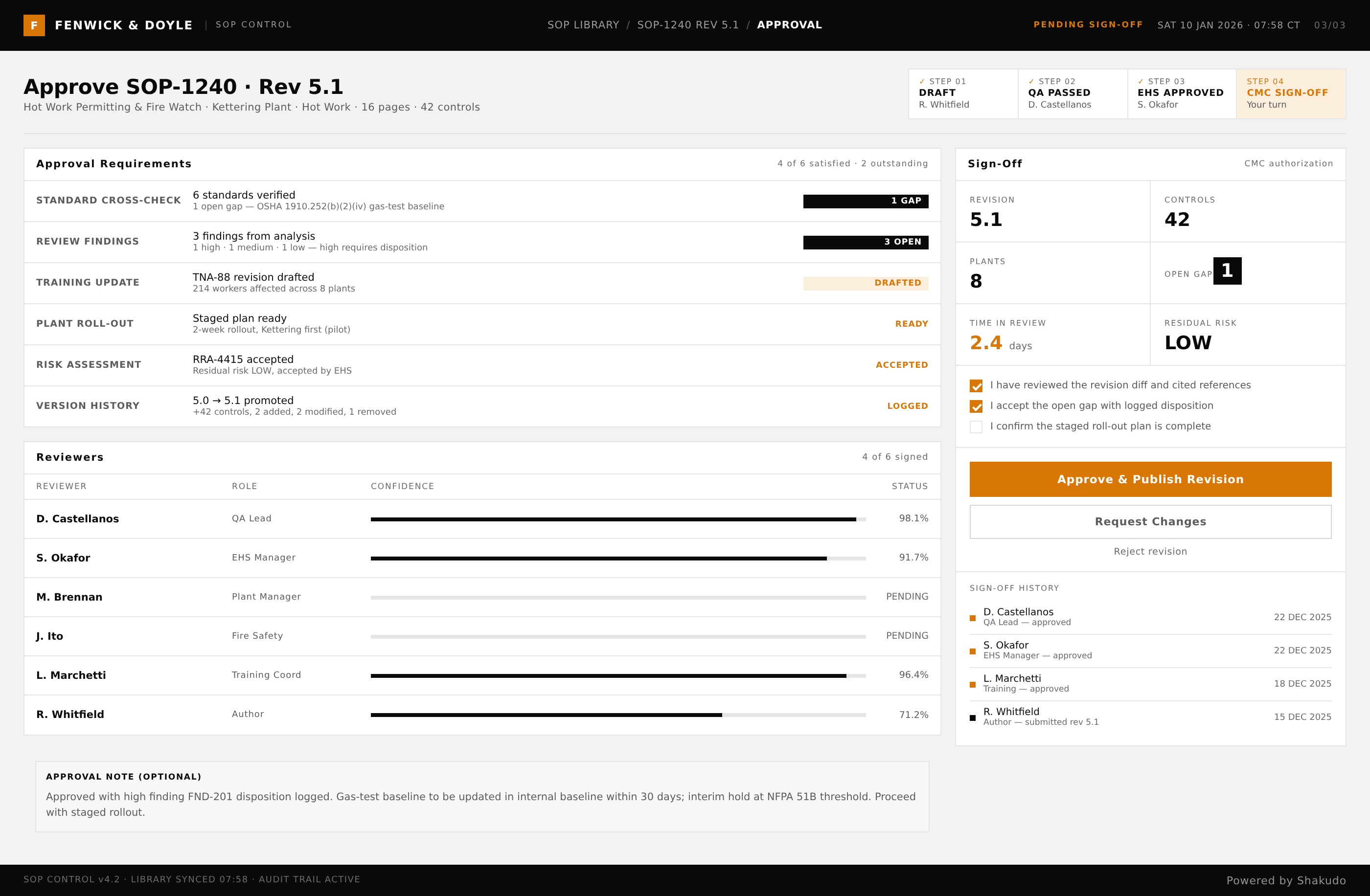
Three screens from a live run: the SOP pipeline, a drafted procedure, and the approval flow.
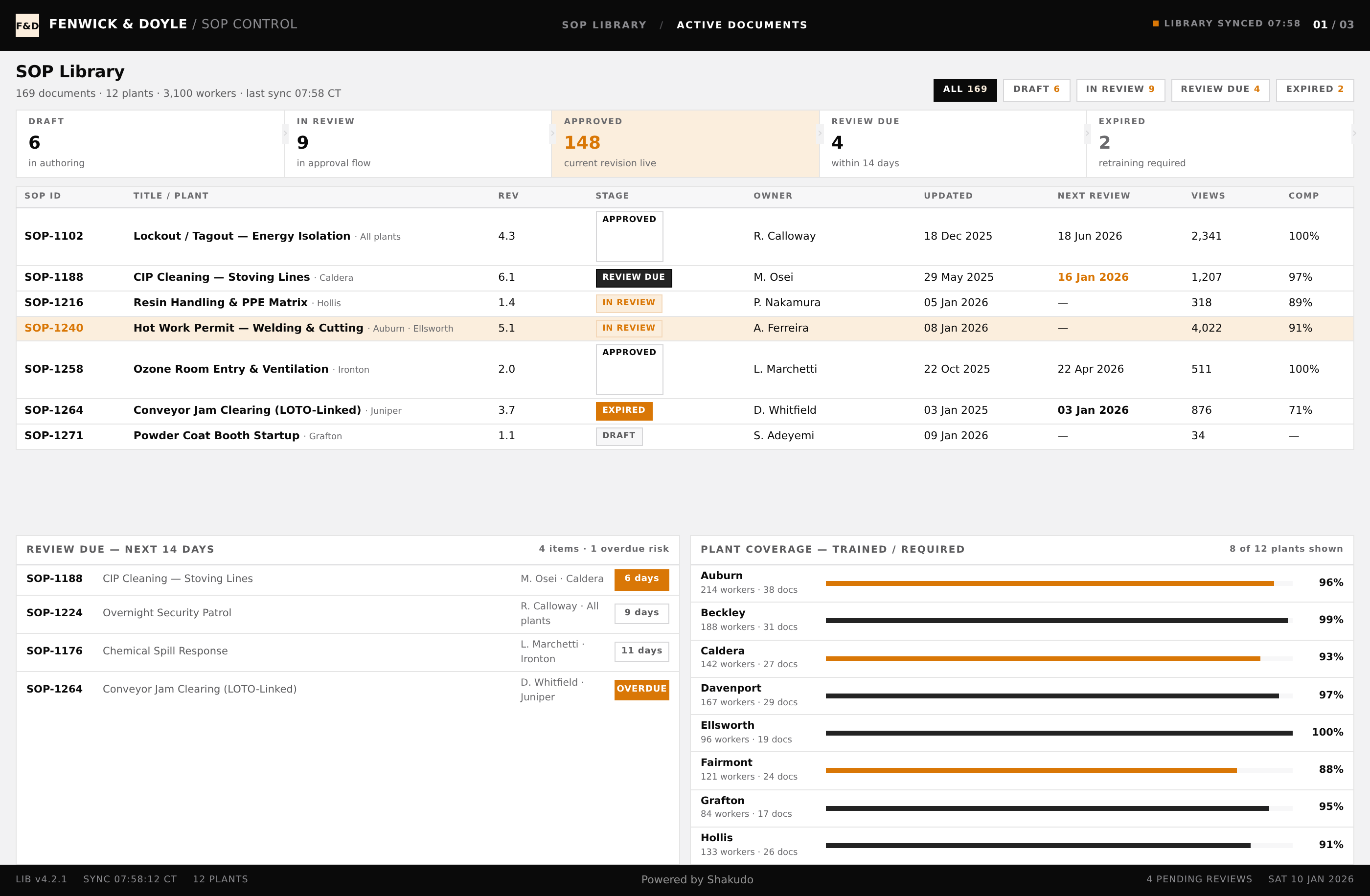
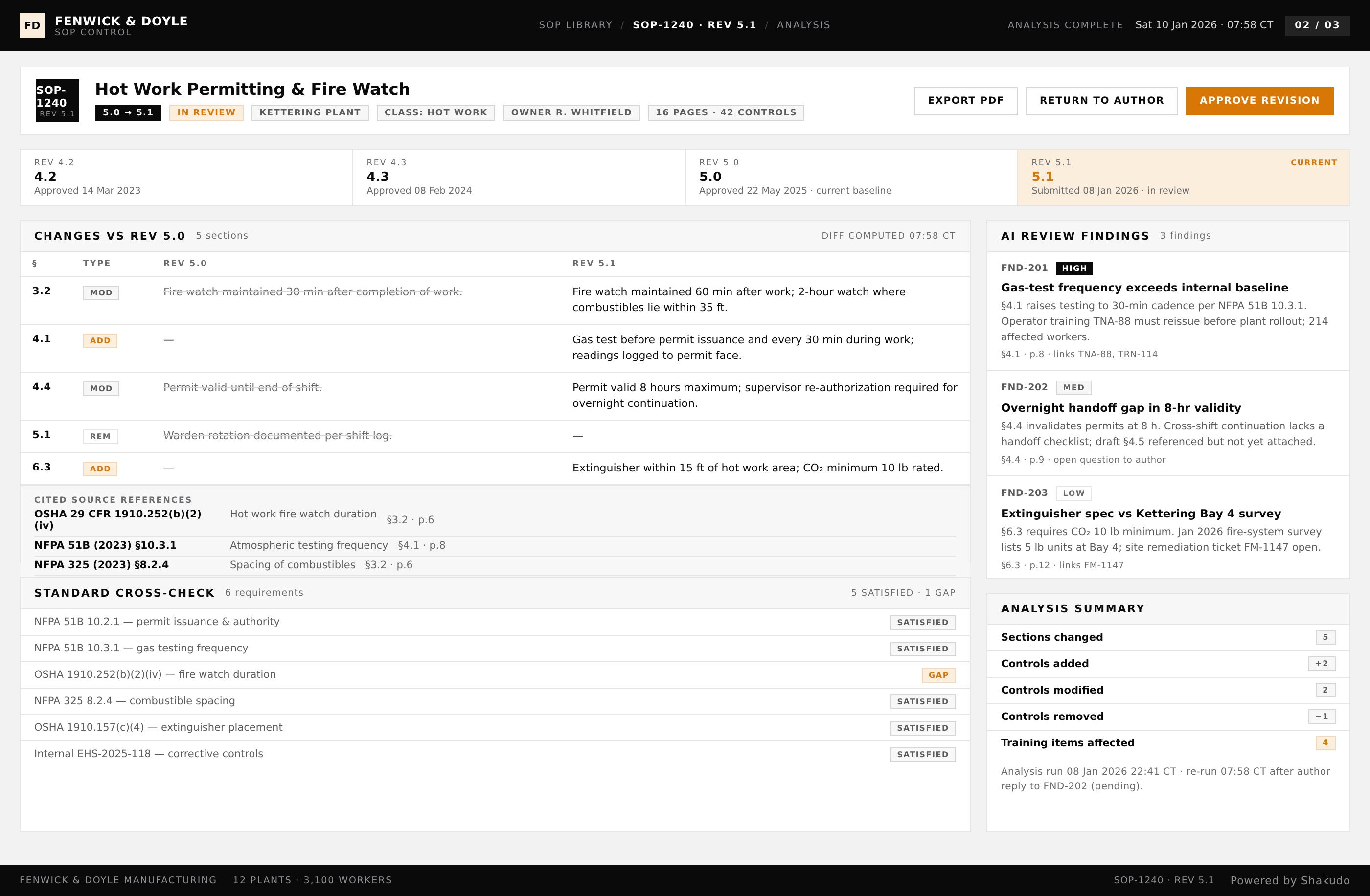
1–2 / 3
A standard operating procedure is a living record of what the team already does. When the procedure lives in someone's head, in a shared drive, or in a whiteboard, the organization carries the risk: an audit arrives, a process changes, a key person leaves, and the record is gone. AI SOP automation turns that record into a versioned, searchable, auditable system, and the platform keeps running after the engagement.
The first project should be a procedure the team performs every day, documented nowhere well. The inputs are messy: a half-finished document, meeting notes, a conversation in a channel, a checklist that lives on a clipboard. AI turns those inputs into a first structured SOP with consistent sections, steps, and roles. From there, the same approach scales to the rest of the library, because the structure learned from the first SOP applies to the next.
For quality and regulated environments, the bar is named: 21 CFR Part 11, ICH E6, Annex 11. The workflow is the same in every case: AI drafts, a human reviews, and the record is redlined against the regulation. The draft carries its provenance: the source notes, the regulation clauses it was checked against, who approved each change. Lab SOPs follow the same pattern. A cold room temperature SOP or a stability testing procedure starts as a draft from the existing notes, gets reviewed by the responsible scientist, and is versioned. This is the affordable path to FDA-aligned SOPs and clinical study documents: drafting is automated, review stays human.
In an AI SOP system, the sensitive inputs are the procedures themselves: production recipes, clinical protocols, quality records. Corporate data never leaves the customer environment. The inference runs on the organization's own infrastructure, on-premises or private cloud, and an audit trail covers every AI output, so a regulator, a customer, or an internal auditor can see what was generated, from which sources, and who approved it.
SOPs change, and in a regulated environment a change is an event: it has an author, a reviewer, an approver, and a reason. Versioning and approval workflows make that change auditable instead of silent. When step four of a procedure changes, the system shows the delta between versions, the review path it took, and the date it became effective. The SOP stays a living record of what the team already does, and the change history is the audit evidence.
Once the library is structured, the team can query it. A knowledge layer over the SOPs answers questions the way a senior person on the team would: which procedure covers this situation, who owns it, what changed in the last version. For a pharma or regulated site, this is the sop bot for pharma use case: a search and answer surface over the procedure library, so the team has the answer before the audit. The library becomes usable by everyone.
The system is buildable infrastructure. The organization owns the platform, extends it to new procedure types and new departments, and it keeps running after the engagement ends. When the scope is right, a conversation with Shakudo is the fastest way to see what the deployment would look like for a specific procedure library.
Start with one SOP the team already runs. Feed the messy notes, the existing document, and the team knowledge into the system. AI produces a first structured SOP, a human reviews it, and it is versioned from there. The pattern then extends to the rest of the library.
AI drafts, a human reviews, and the record is redlined against the named regulations: 21 CFR Part 11, ICH E6, and Annex 11. The draft carries provenance, so the review team can verify which clauses the procedure was checked against. The review step stays human, and the audit trail records who approved each change.
Versioning and approval workflows. When the process changes, the procedure is updated through the same review path, and the system records the delta, the reviewers, and the effective date. The SOP stays a living record, and the change history is the audit evidence.
Yes. Once the library is structured, a knowledge layer over it answers questions: which procedure applies, who owns it, what changed in the last version. The team gets the answer before the audit, and the library becomes usable by everyone.
Corporate data never leaves the customer environment. The inference runs on the organization's own infrastructure, and an audit trail covers every AI output, so the organization controls where the procedures, protocols, and quality records are processed and stored.
Yes. The system is buildable infrastructure that the organization owns and operates. The team can extend it to new procedure types and new departments without starting over.
Shakudo deploys an AI SOP system inside your own environment. AI drafts from the messy notes the team already keeps, a human reviews at every step, and the result is a versioned, searchable, auditable record that stays current as the process changes. Corporate data never leaves the customer environment.










"What drew me in is simple. When developers ship production-ready code this quickly, how can I have environments spun up fast enough? Shakudo is how we close that gap."



"Shakudo does not just provide the platform. It is a real partnership. They are always there to help and execute our vision faster and the right way. It is like a co-team working together to achieve our goals."