







Three screens from a live run: the expense overview, a receipt extraction, and the claim approval.
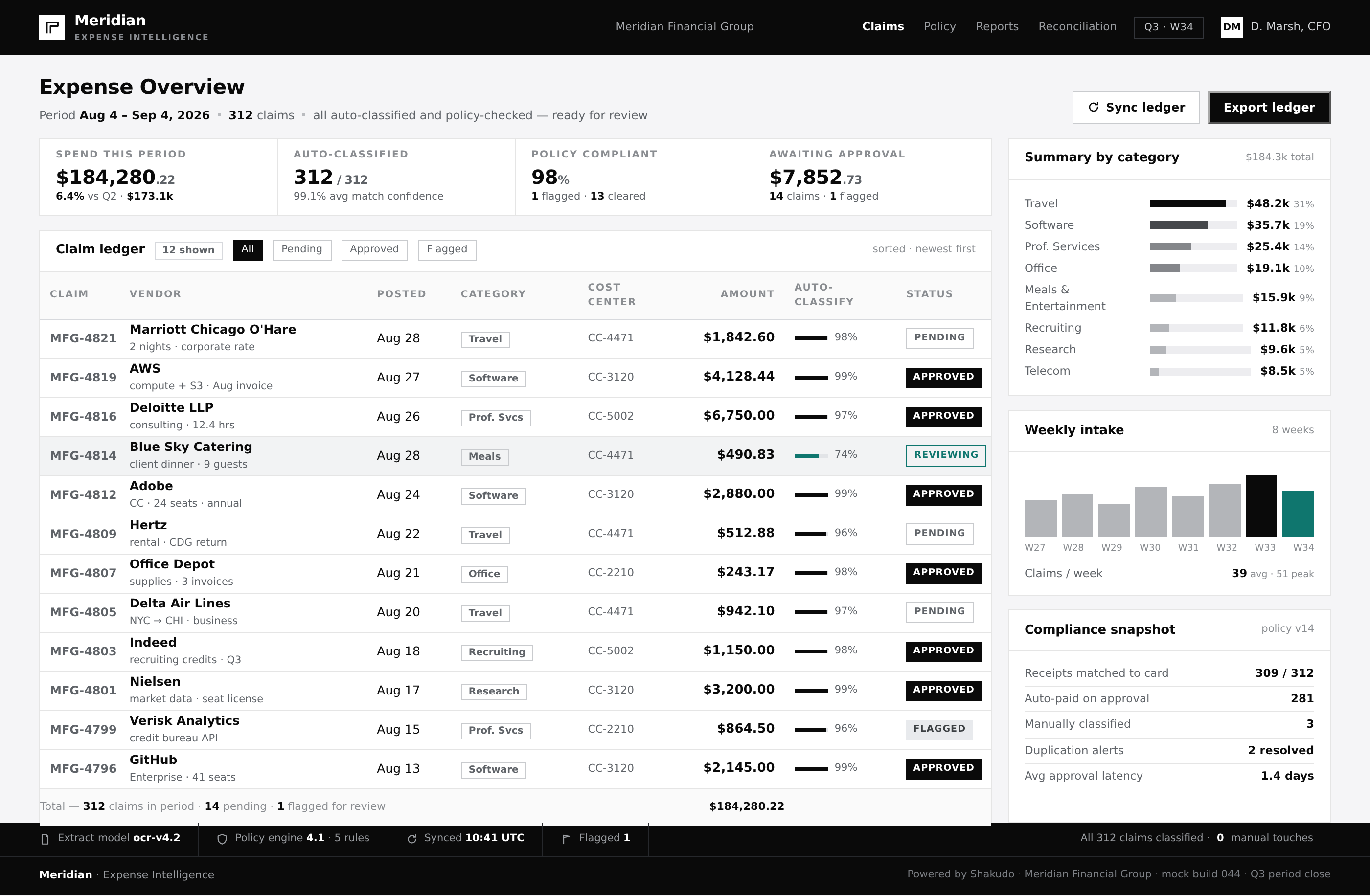
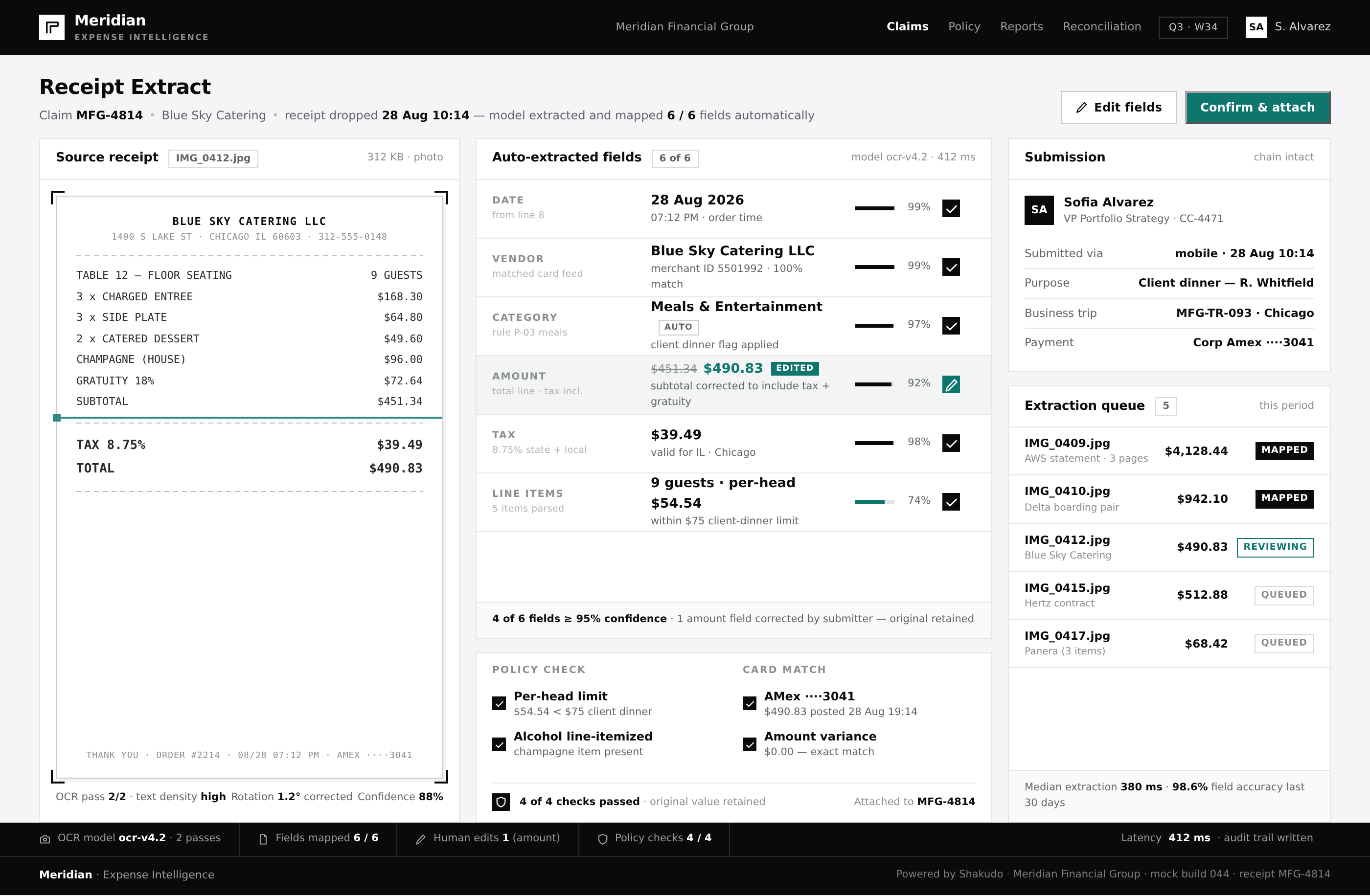
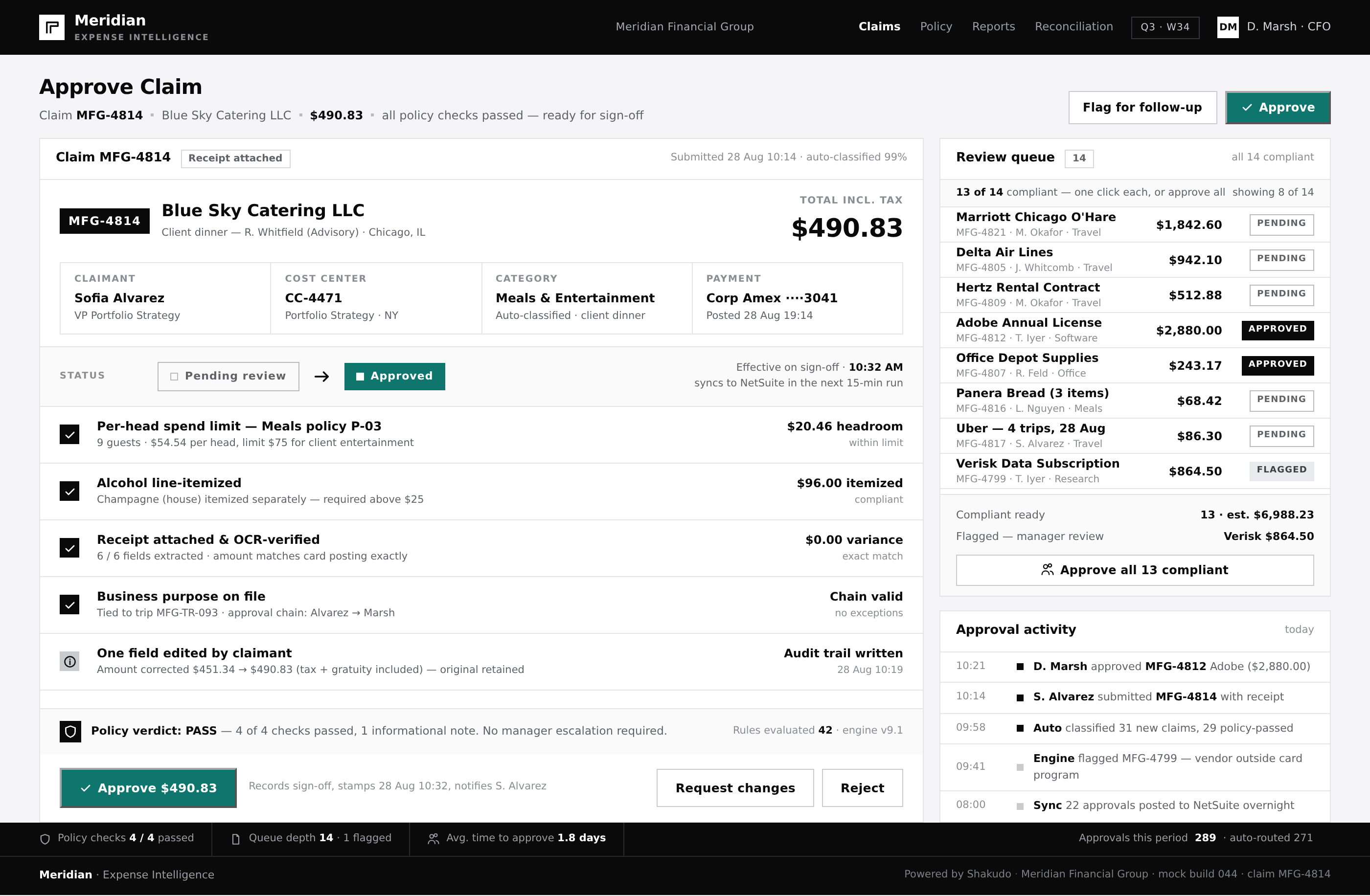
1–2 / 3
The average expense report costs $58 to process and takes 20 minutes to complete, and one in five reports contains errors that add another $52 and 18 minutes to fix. Finance teams spend an average of 12 hours each week chasing receipts, correcting entries, and reconciling statements. Automating expense reporting with conversational AI removes this burden: employees describe expenses in plain language, and submission time drops to roughly 6 minutes per report.
Organizations lose approximately 5% of annual revenue to occupational fraud, with expense reimbursement fraud among the most pervasive categories. One in five expense claims contains manipulation, and the average fraudulent claim value sits at $180. Manual processes cannot keep up with the volume or sophistication of modern expense fraud.
Employees delay filing because the process is tedious. A salesperson returns from a trip, intends to file, gets pulled into back-to-back meetings, and two weeks later finance is still chasing a crumpled receipt. By the time reports arrive, amounts are reconstructed from memory and approvals stall in manager inboxes over long weekends. Every manual report requires data entry, policy review, reconciliation against corporate card statements, and general ledger coding. When something is coded wrong or a receipt is missing, the report bounces back and the cycle repeats. Finance teams end up spending 624 hours per year per employee on expense processing alone.
A conversational expense assistant that employees actually use. Instead of navigating forms and dropdown menus, an employee types "Client lunch at a restaurant, $47.50" in a chat window, and the AI extracts the amount, categorizes it as meals and entertainment, attaches the merchant, checks it against company policy, and submits the report automatically.
The measurable outcomes: submission time falls from 20 minutes to roughly 6 minutes per report, AI policy engines flag 91% of out-of-policy submissions instantly at the point of entry before they reach a manager inbox, and per-report cost drops from over $26 to under $7. Teams that deploy these systems see per-report cost drop by 74% compared to manual processing, and automated fraud detection catches three to five times more anomalies than manual audits. As the fraud landscape shifts, that protection matters: AI-generated fake receipts now account for over 70% of flagged expense fraud, and 34% of surveyed professionals admit to using AI to fabricate receipts. The solution deploys on the customer's own infrastructure, on-prem or in the customer's cloud, with self-hosted models and on-premises inference keeping sensitive expense data inside the corporate perimeter.
The system is built around three core capabilities. First, receipt capture and optical character recognition: employees photograph or upload receipts, and the system extracts amounts, dates, merchants, and line items automatically. Second, policy enforcement: the AI checks each expense against company-specific rules, flagging violations before submission rather than after, so a meal over the daily limit or a category requiring pre-approval is caught at entry. Third, fraud detection: pattern analysis identifies duplicate claims, amount inflation, and fabricated receipts, protecting organizations from fraudulent claims that average $180 each.
Compliance and integrations complete the design. Approved expenses flow directly into the general ledger through integrations with existing ERP and accounting systems, without manual re-entry, and financial data stays within controlled environments for the life of the solution.
The assistant runs on a practical, open stack. Python provides the core service logic for extraction, validation, and submission. LangChain orchestrates the conversation, routing each employee message through the appropriate tools. OpenAI models handle the language understanding that turns a plain-language description into structured expense data. Pinecone stores company policy documents as a vector database, so the system retrieves the relevant policy and validates each submission in real time. FastAPI exposes the backend as a service, and Streamlit provides the chat interface that employees interact with.
This is for the finance teams in financial services firms where expense volume makes manual processing a standing cost: controllers and accounting teams running the month-end close, AP teams reconciling corporate card statements, and finance operations leaders managing policy compliance across a distributed workforce. It fits organizations where expense reports flow from sales desks, deal teams, and field staff, and where fraud exposure on reimbursement is a board-level concern.
Yes. The AI parses natural language descriptions that include multiple items, split costs, and unusual categories. An employee can type "Hotel $180 per night for 3 nights, plus $45 parking" and the system creates separate line items automatically. LangChain routes each component to the correct category and validates them independently against policy.
The AI retrieves company-specific policy documents from a vector database and checks each expense against them in real time. If a meal exceeds the daily limit or a category requires pre-approval, the system flags it before submission. This catches 91% of policy violations at the point of entry, reducing the back-and-forth between employees and managers.
The system analyzes receipt metadata, pixel patterns, and merchant data to detect fabricated or altered receipts. AI-generated fake receipts now account for over 70% of flagged fraud. Automated detection catches three to five times more anomalies than manual review, protecting organizations from fraudulent claims averaging $180 each.
With Shakudo, teams can deploy a conversational expense assistant in weeks rather than the six to twelve months that traditional development requires. The platform provides pre-configured integrations, model hosting, and security controls so finance teams can start automating reports quickly without building infrastructure from scratch.
When the goal is an expense process that pays back in minutes, a conversation with Shakudo is the fastest way to see it on your own expense data. The solution deploys on your infrastructure, on-prem or in your cloud, a first working pipeline is in place within days, and you can book a demo to watch it run.
Employees describe expenses in plain language through a chat interface. The AI extracts amounts, categorizes spending, validates against policy, and submits reports automatically. This approach cuts processing time from 20 minutes to under 6 minutes per report.










"What drew me in is simple. When developers ship production-ready code this quickly, how can I have environments spun up fast enough? Shakudo is how we close that gap."



"Shakudo does not just provide the platform. It is a real partnership. They are always there to help and execute our vision faster and the right way. It is like a co-team working together to achieve our goals."