







Three screens from a live run: the data set, the fused record, and the review.
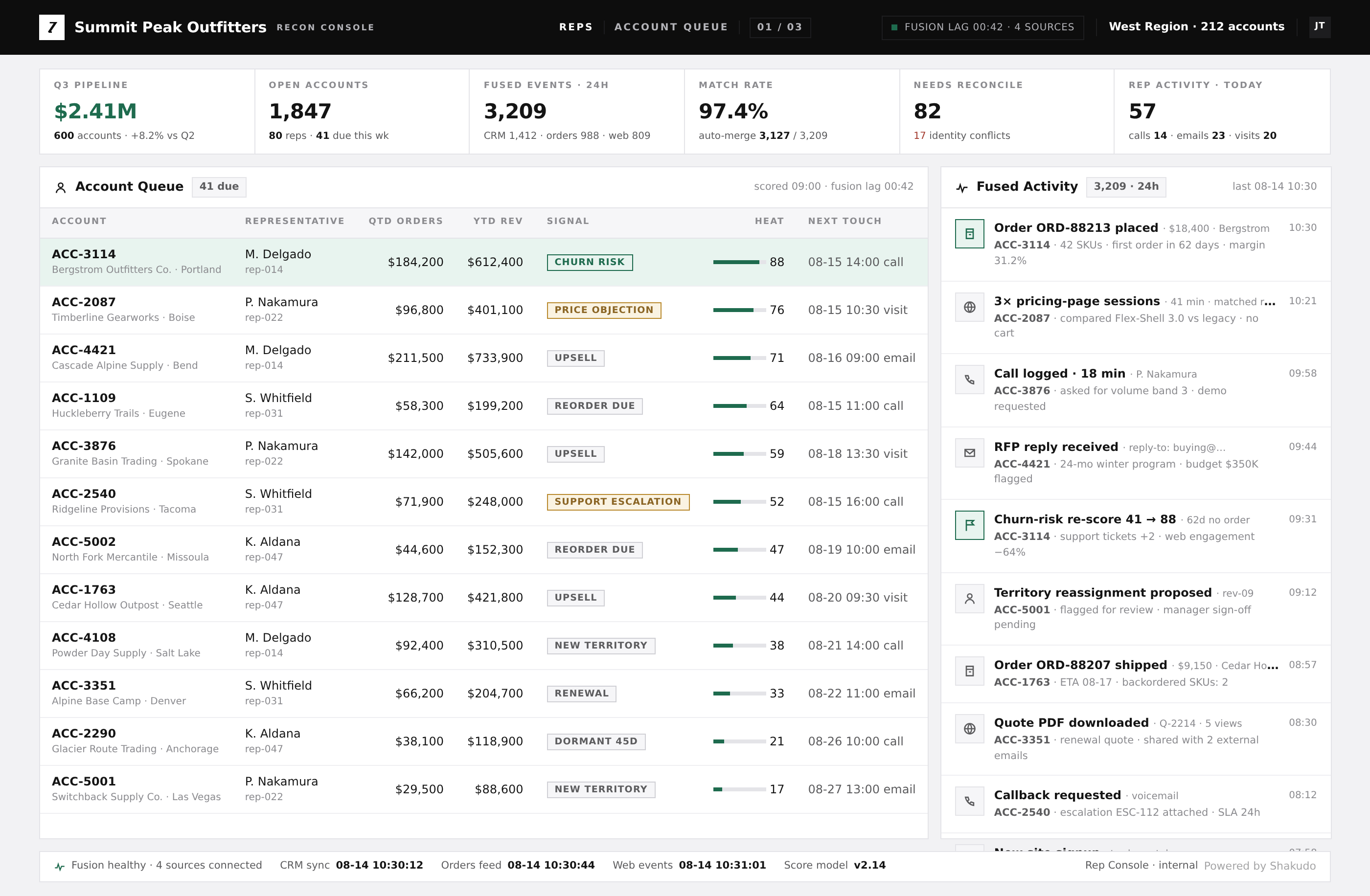
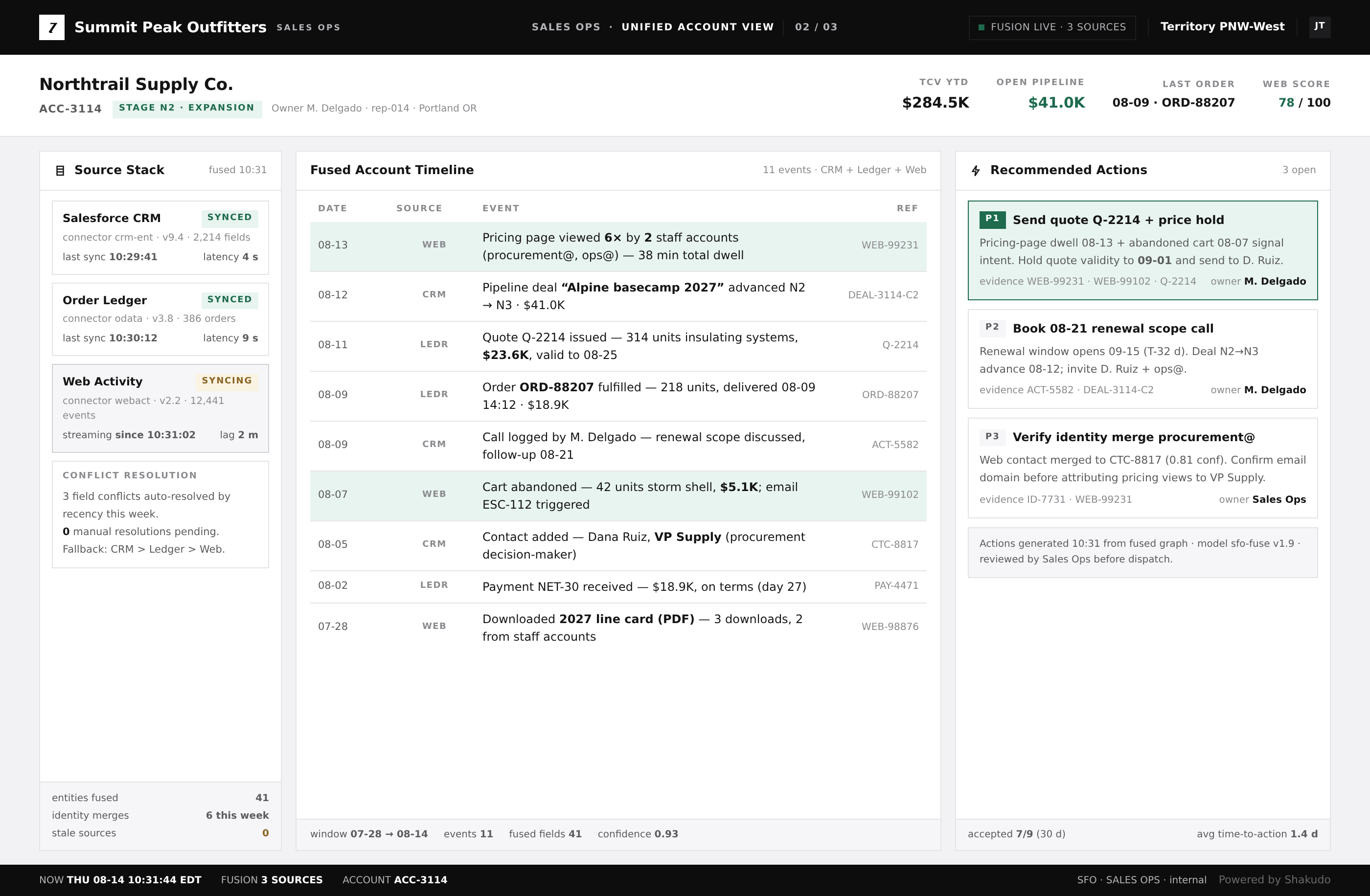
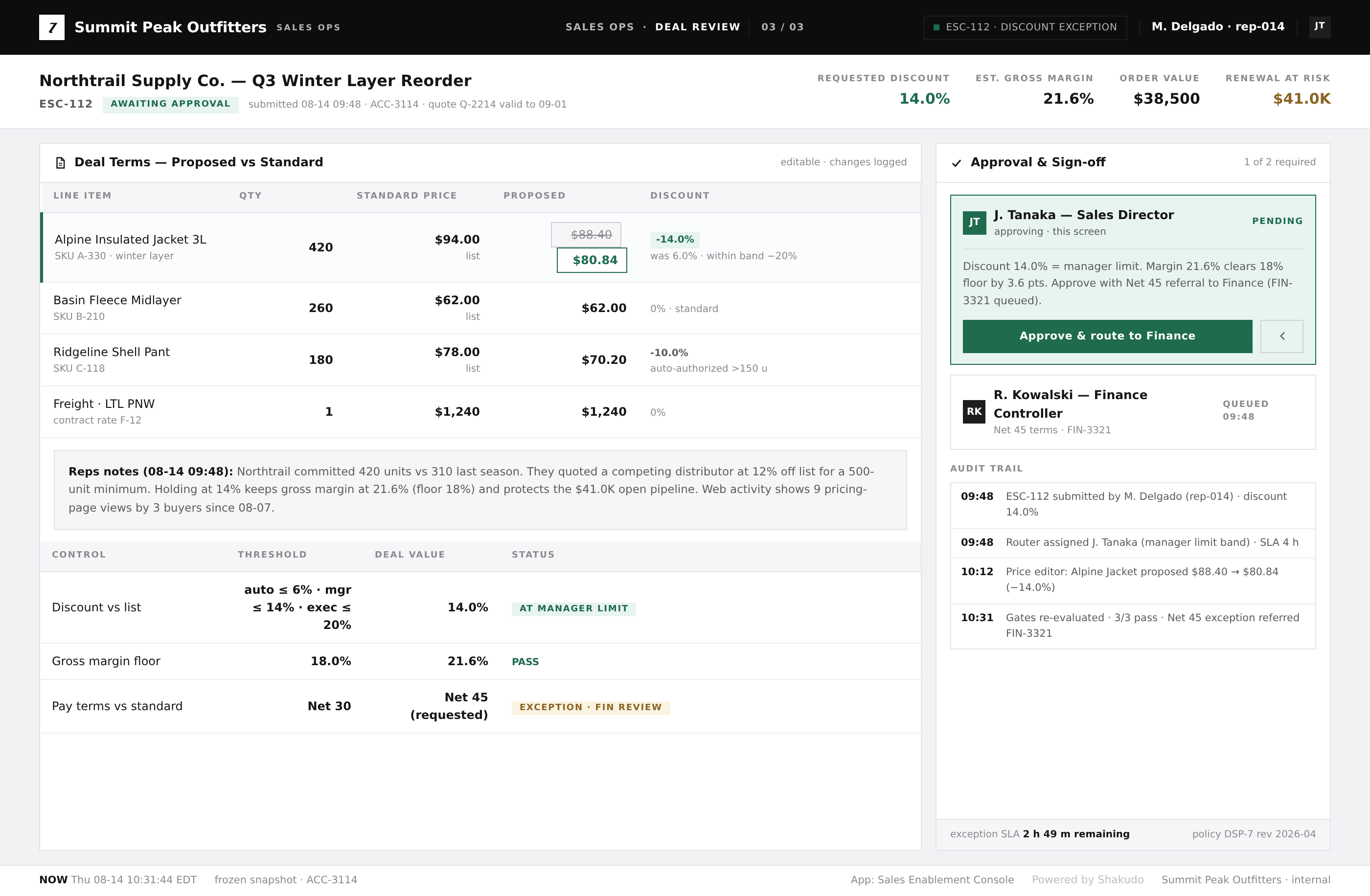
1–2 / 3
Field sales teams in the beverage industry manage thousands of accounts across distributors, direct retail, and on-premise channels. Sales data lives in disconnected systems: CRM records, POS terminals, distributor depletion reports, and manual spreadsheets. Reps spend hours reconciling numbers instead of selling, and the numbers still disagree.
Nearly 80 percent of customer interactions never make it into the CRM, and half of revenue operations time goes to cleaning data by hand. AI data fusion ends that pattern by combining every source into one dataset reps can actually query.
Data fragmentation creates blind spots at every level of a sales organization. When sales intelligence depends on manual data assembly, the lag between activity and insight stretches from days to weeks. By the time a dashboard reflects last quarter's distributor depletions, the window to adjust a promotion has closed. Teams that fuse their data sources into a single pipeline cut review cycles from days to minutes and surface account risks before they become losses.
The manual approach also burns headcount. Analysts pull exports from three or four systems, reconcile SKU mismatches, and rebuild pivot tables every reporting period. Each handoff introduces errors. A single misaligned product code can hide a declining account for an entire quarter. A regional manager cannot see which distributor accounts are underperforming because POS data sits in one system and CRM activity in another, so field reps arrive at accounts without knowing recent purchase trends or pending promotions. The result is missed upsell opportunities and reactive selling rather than proactive account management.
Shakudo builds a data fusion pipeline that ingests CRM records, POS transactions, and distributor reports into a shared model, then turns that model into rep-ready intelligence. Large language models classify unstructured distributor notes and email summaries, while vector search lets reps ask natural language questions about territory performance. Instead of exporting three spreadsheets and reconciling by hand, a rep asks which accounts show declining order volume and gets an answer grounded in fused data.
The intelligence layer also generates enablement materials automatically. Call summaries, win-loss patterns, and account briefs compile from fused data into territory-specific playbooks. Enablement teams that previously spent weeks building training content produce it in days. Reps get the right talking points for each account before they walk in the door, and managers spot at-risk accounts through anomaly detection rather than end-of-quarter surprises. The payoff shows up in the numbers that matter: fewer manual reconciliation hours, faster review cycles, and account risks caught within days instead of quarters.
Implementation starts with connectors. Data connectors pull from CRM APIs, POS databases, and distributor portals on a schedule. Transformation jobs normalize SKUs, map distributor territories, and flag anomalies, so a product code in the distributor report resolves to the same item in the CRM and the POS feed. A dashboard layer presents the fused data with filters by region, channel, and product line.
The key implementation choice is where computation happens. Running models close to the data warehouse minimizes transfer costs and latency. A platform that orchestrates these pipelines lets data and sales teams iterate on dashboard logic without rebuilding infrastructure. Organizations that take this approach deploy sales intelligence systems in weeks rather than the months a custom build demands, and they can swap data sources as distributor relationships change without rewriting code.
Python runs the pipeline itself: ingestion, transformation jobs, anomaly detection, and the normalization rules that align SKUs and territories across systems. LangChain structures the language model calls that classify distributor notes and draft account briefs from fused data. OpenAI does the classification and summarization, reading unstructured distributor emails and turning them into tagged, queryable records.
Pinecone stores the vector index over fused records and distributor notes, which is what powers the natural language territory queries reps use every day. FastAPI exposes the fusion pipeline and query endpoints, so the CRM, BI tools, and the rep dashboard all read from the same fused dataset. Streamlit provides the internal dashboards where revenue operations previews territory views, tunes anomaly thresholds, and reviews generated account briefs without writing code.
This solution fits consumer packaged goods and beverage companies running field sales through distributors and direct channels, where POS data, depletion reports, and CRM activity each tell part of the story. The buyers are revenue operations leaders and sales operations directors who own data quality, and the daily users are field reps, regional sales managers, and the analysts who currently spend their week reconciling exports. Retail and distribution heavyweights with large account counts benefit most, because the reconciliation burden grows with every channel added.
Data fusion combines sales records from CRM, POS, distributor reports, and other sources into one unified dataset. AI models clean and classify the merged data so reps query territory performance without manual reconciliation.
Reps arrive at accounts with current order history, promotion status, and risk flags in one view. Instead of digging through separate systems, they get account briefs and talking points generated from fused data before each visit.
A managed pipeline deploys data connectors, transformation jobs, and dashboards in weeks. Custom builds that wire together multiple tools and data warehouses typically take six to twelve months before reps see value.
Yes. Language models classify unstructured distributor notes and emails, while transformation jobs normalize SKUs and territory mappings. The pipeline adapts as distributors change report templates or add new product lines.
When the goal is sales intelligence reps actually use, a conversation with Shakudo is the fastest way to see it on your own data. The pipeline deploys on your own infrastructure, on-prem or in your cloud, and a first working fusion layer is in place within days. Book a demo to review the output.
AI data fusion connects sales records from CRM, POS terminals, and distributor reports into one unified dataset. Field reps get real-time territory intelligence and account briefs without manual reconciliation, and revenue operations frees analysts from repetitive data cleaning.










"What drew me in is simple. When developers ship production-ready code this quickly, how can I have environments spun up fast enough? Shakudo is how we close that gap."



"Shakudo does not just provide the platform. It is a real partnership. They are always there to help and execute our vision faster and the right way. It is like a co-team working together to achieve our goals."