






Three screens from a live monitoring desk: the desk board, the article-level sentiment, and the analyst review.
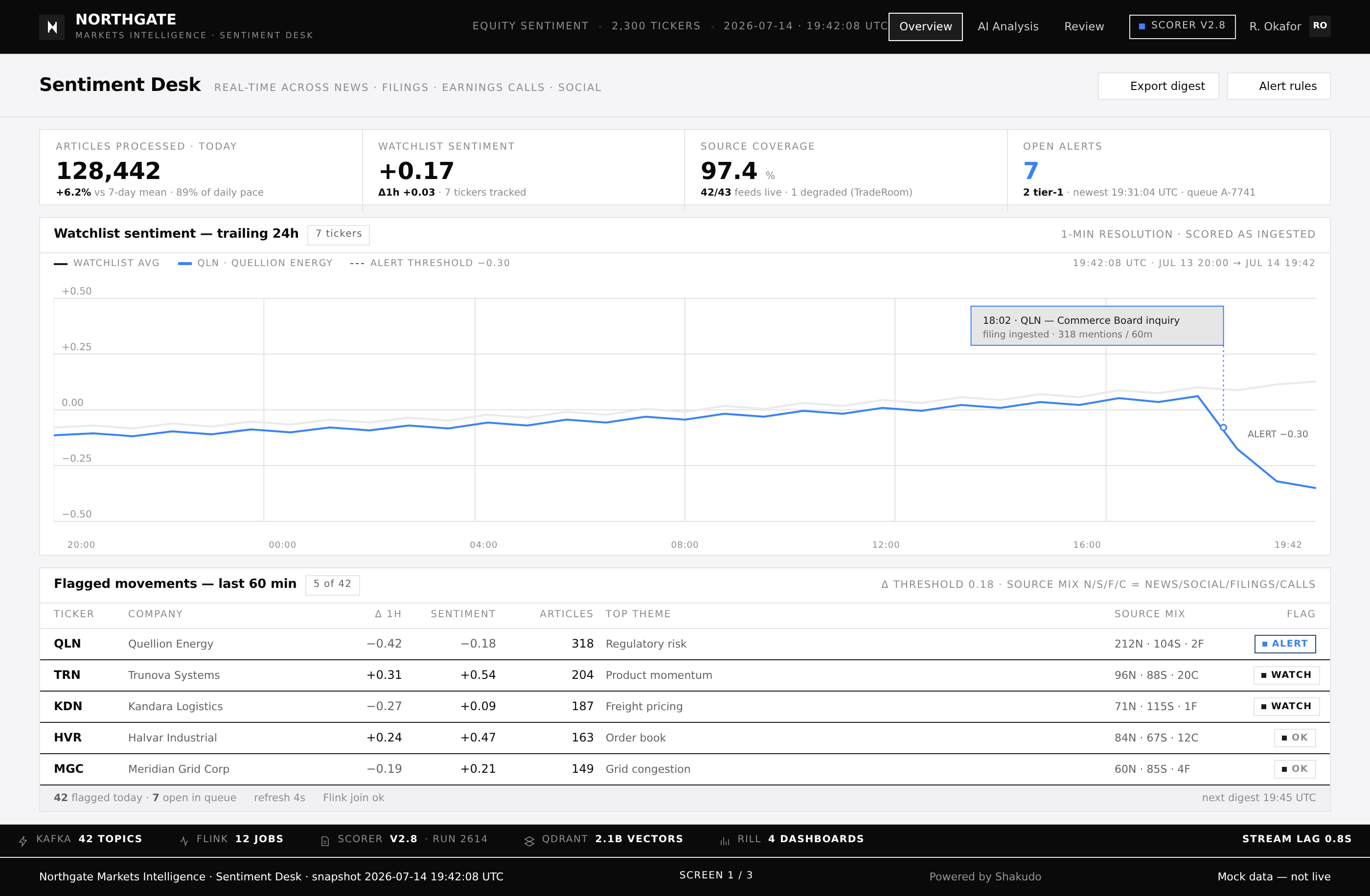
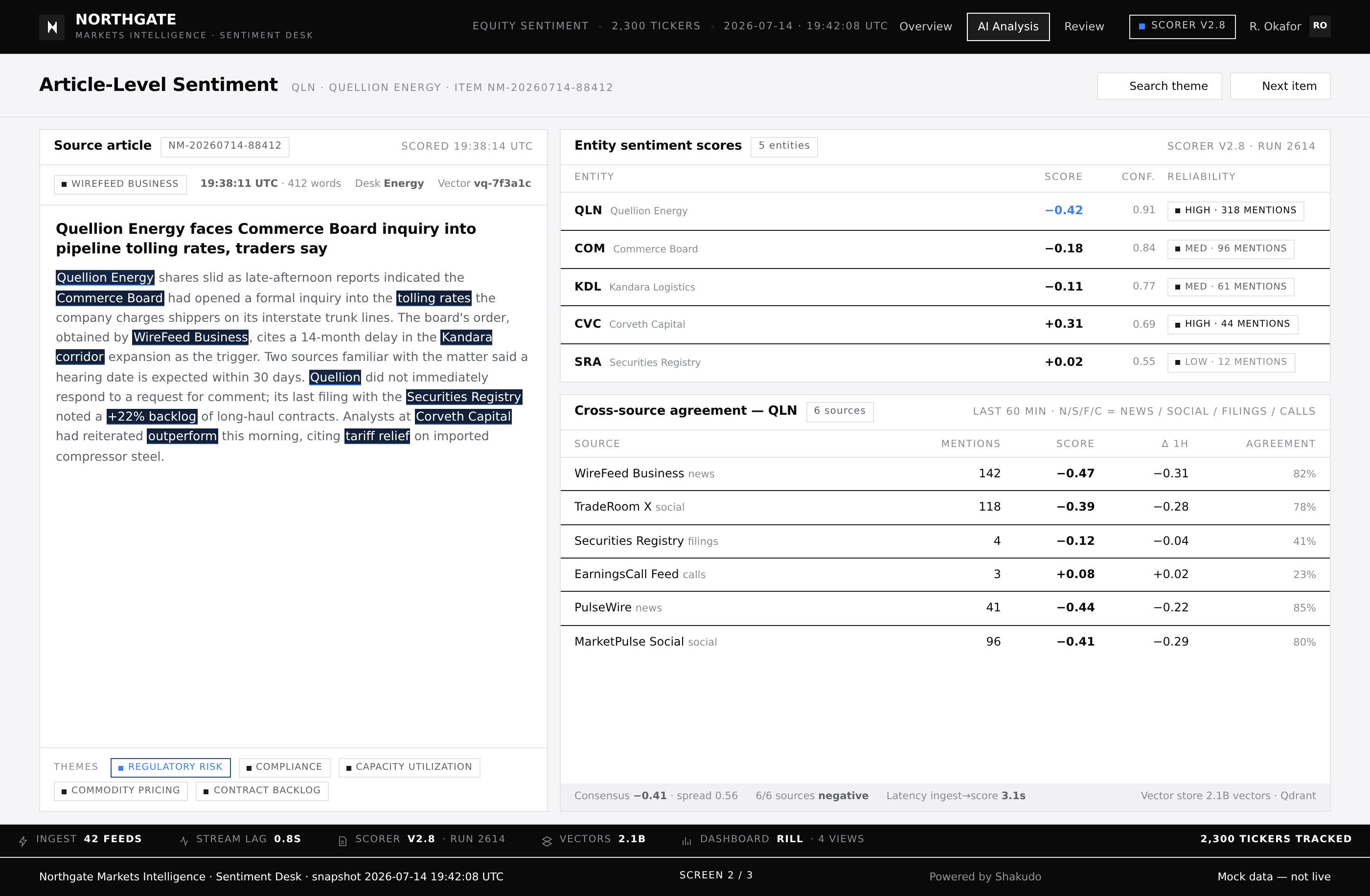
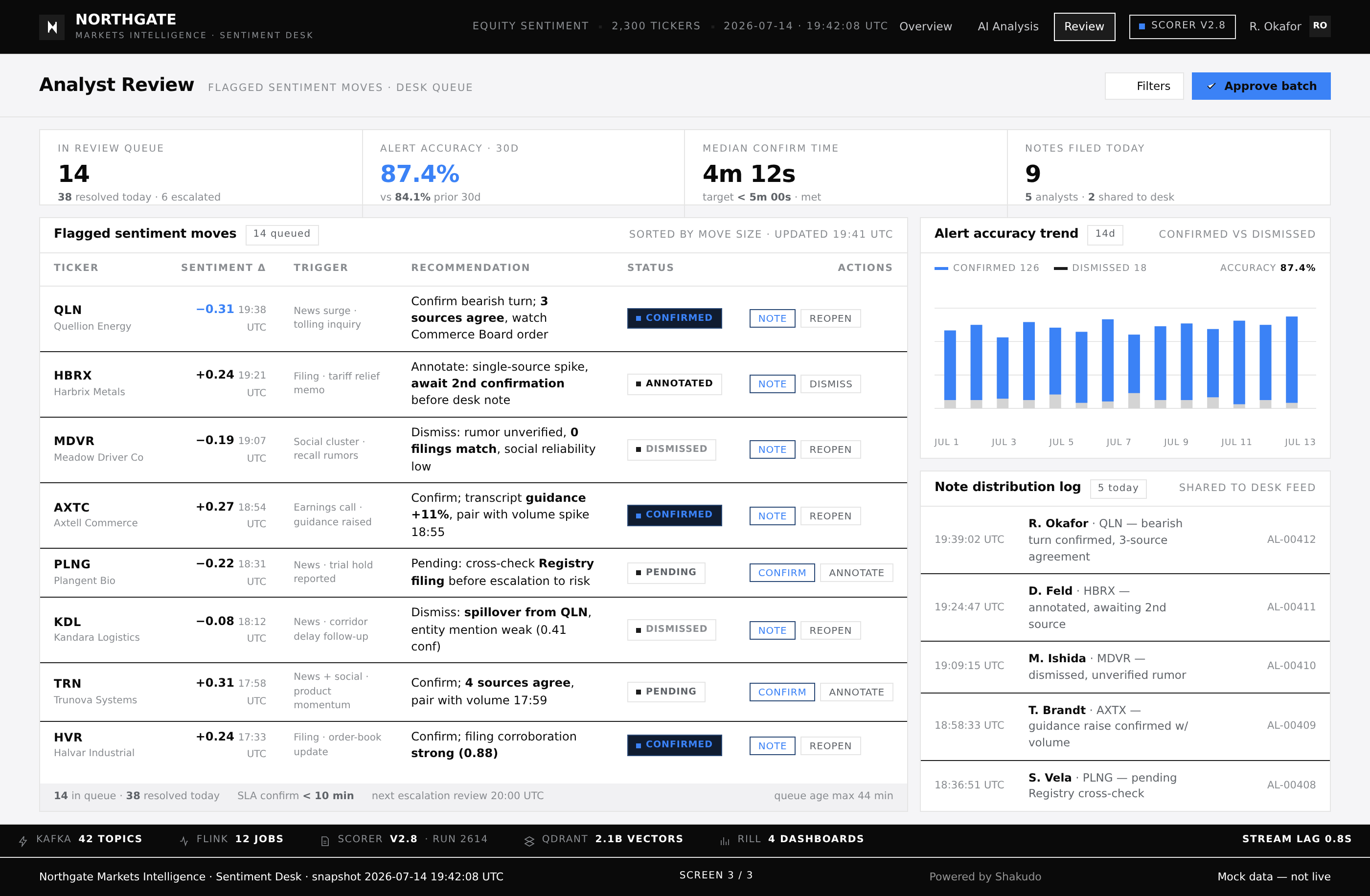
1–2 / 3
Market sentiment turns before the price does. The news breaks, the filing lands, the earnings call ships, and the social feed moves, all within the same minutes. The desk that reads those signals first has the edge, and the desk that reads them last is chasing a price that already moved. The gap between the two is the speed at which a team can pull sentiment out of a stream of sources and put it in front of the analyst while it is still fresh. AI sentiment analysis is the tool that closes that gap.
Feeding a real-time stream of financial news into an LLM for sentiment is an infrastructure problem as much as a model problem. It needs the news, filings, earnings transcripts, and social posts ingested as they arrive, scored for sentiment and theme, and correlated with the market movement that is happening at the same time. Building that pipeline from scratch takes months of development and integration. A dedicated AI sentiment stack on Shakudo deploys within days, and the first live sentiment feed is running the same week.
Shakudo deploys an AI market sentiment system that reads sentiment across the sources the market moves on. The system ingests the news, filings, earnings calls, and social streams as they arrive, and it scores each item for sentiment and key themes. The analyst gets a real-time view of where the sentiment is shifting, and the correlation with the market movement that is happening at the same time. Investment firms react to a sentiment shift while it is still moving, which is when the opportunity and the risk are both still open. The decision-making improves, the risk management tightens, and the portfolio read the desk works from is one the model keeps current.
The system runs where the firm's data stays, and the news stream feeds the model in the environment the firm controls. Apache Kafka ingests the real-time streams from the news, filings, and social sources, and it hands them to the model as they arrive. Apache Flink runs the complex event processing and the time-series analysis that ties each sentiment score to the market data at the same timestamp. LangChain drives the LLM that reads each item and scores the sentiment and the key themes, and Qdrant holds the vectors that make the semantic search fast, so the desk can ask for a theme and get the matching items back in seconds. MLflow manages the models that power the sentiment scoring and the predictive read, so the version in front of the desk is the one the team last validated. Rill puts the sentiment trends and the market correlations on a fast, interactive dashboard. The feed is live, and the latency the desk sees is the latency of the stream, measured in seconds from the source to the dashboard.
Investment firms, trading desks, and research teams where the speed of the sentiment read is part of the edge. It suits the analysts who want the news, filings, and social signal in front of them while it is still fresh, the risk team that wants to see the sentiment shift before the position does, and the data team that owns the pipeline in-house. The system suits a firm that reads multiple sources at once, because the value is in the cross-source view that a single feed cannot give.
The news and the other sources land in Apache Kafka as they arrive, and the stream hands each item to the LangChain-driven LLM as it comes in. The model scores the item for sentiment and key themes, and the result is written to the store that the dashboard reads. The whole path is a stream, so the sentiment score for a fresh headline lands while the headline is still new. The desk works from a feed that is as current as the source, and the model keeps scoring as the items arrive.
The latency is the latency of the stream, measured in seconds from the source to the dashboard. Apache Kafka hands each item to the model as it arrives, and Apache Flink pairs the score with the market data at the same timestamp. The dashboard updates as the scores land, so the analyst sees the shift the moment the stream produces it. The firm controls the model and the data path, which is what keeps the read honest and the latency tight.
In the firm's own environment. The news, filings, earnings, and social streams feed the model where the firm's data is, and the scores stay in the environment the firm controls. Nothing is sent to an external AI vendor to be read, and the model the desk works from is one the firm owns and can re-validate at any time.
For the trading desk, that means the sentiment shift is in front of the analyst while it is still moving. Book a demo and see AI market sentiment read the sources the market moves on, in real time.
Shakudo's AI-powered market sentiment analysis platform transforms vast streams of market data into actionable investment intelligence. By leveraging advanced natural language processing and machine learning algorithms, this solution continuously monitors and analyzes sentiment across multiple sources, including news articles, social media, and financial reports. Shakudo uniquely enables rapid deployment of these sophisticated AI tools within existing investment workflows, empowering organizations to quickly identify market trends, predict potential market movements, and make data-driven investment decisions.










"What drew me in is simple. When developers ship production-ready code this quickly, how can I have environments spun up fast enough? Shakudo is how we close that gap."



"Shakudo does not just provide the platform. It is a real partnership. They are always there to help and execute our vision faster and the right way. It is like a co-team working together to achieve our goals."