






Three screens from a live dispatch: the network board, the route replan, and the approval queue.
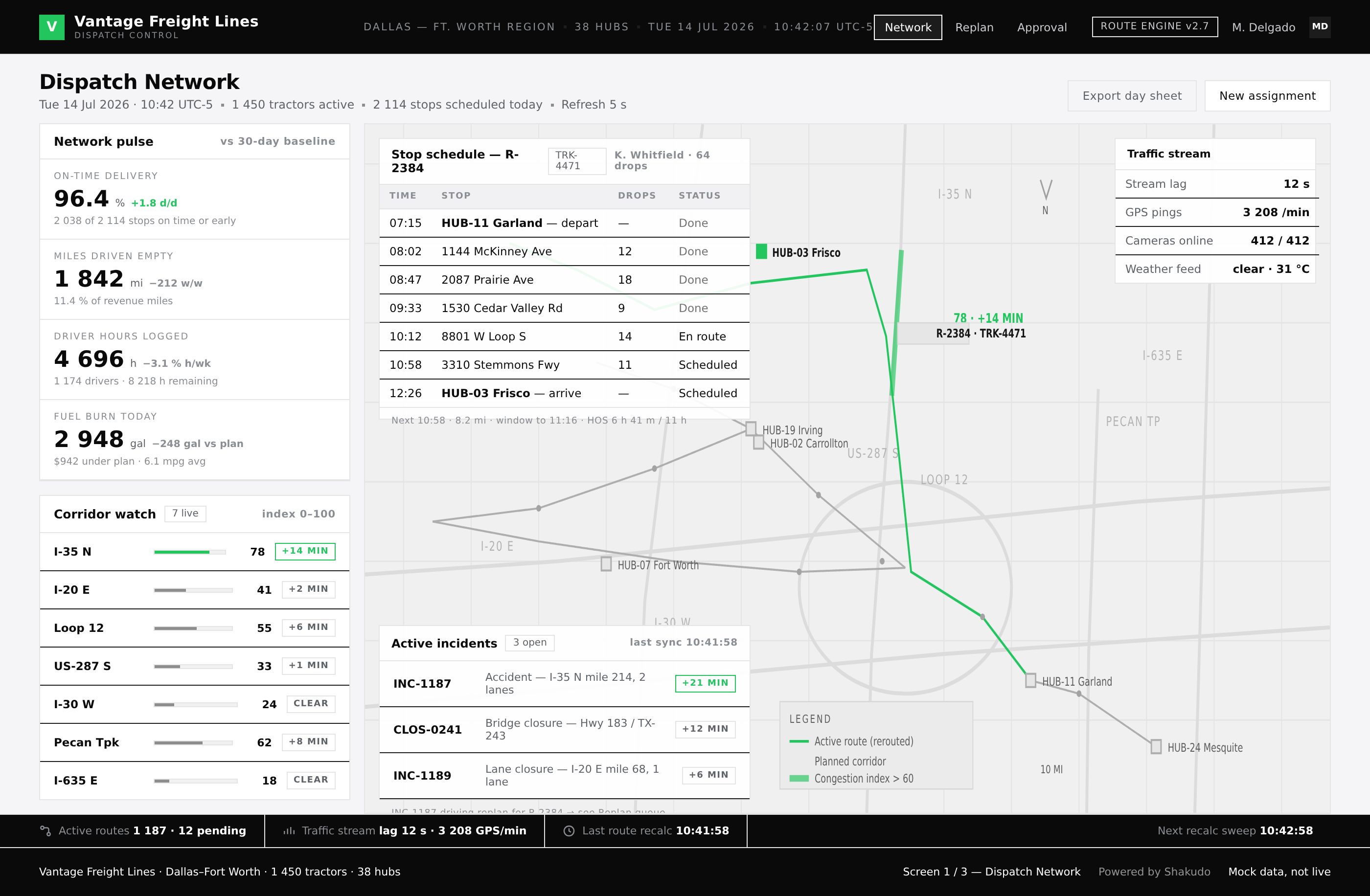
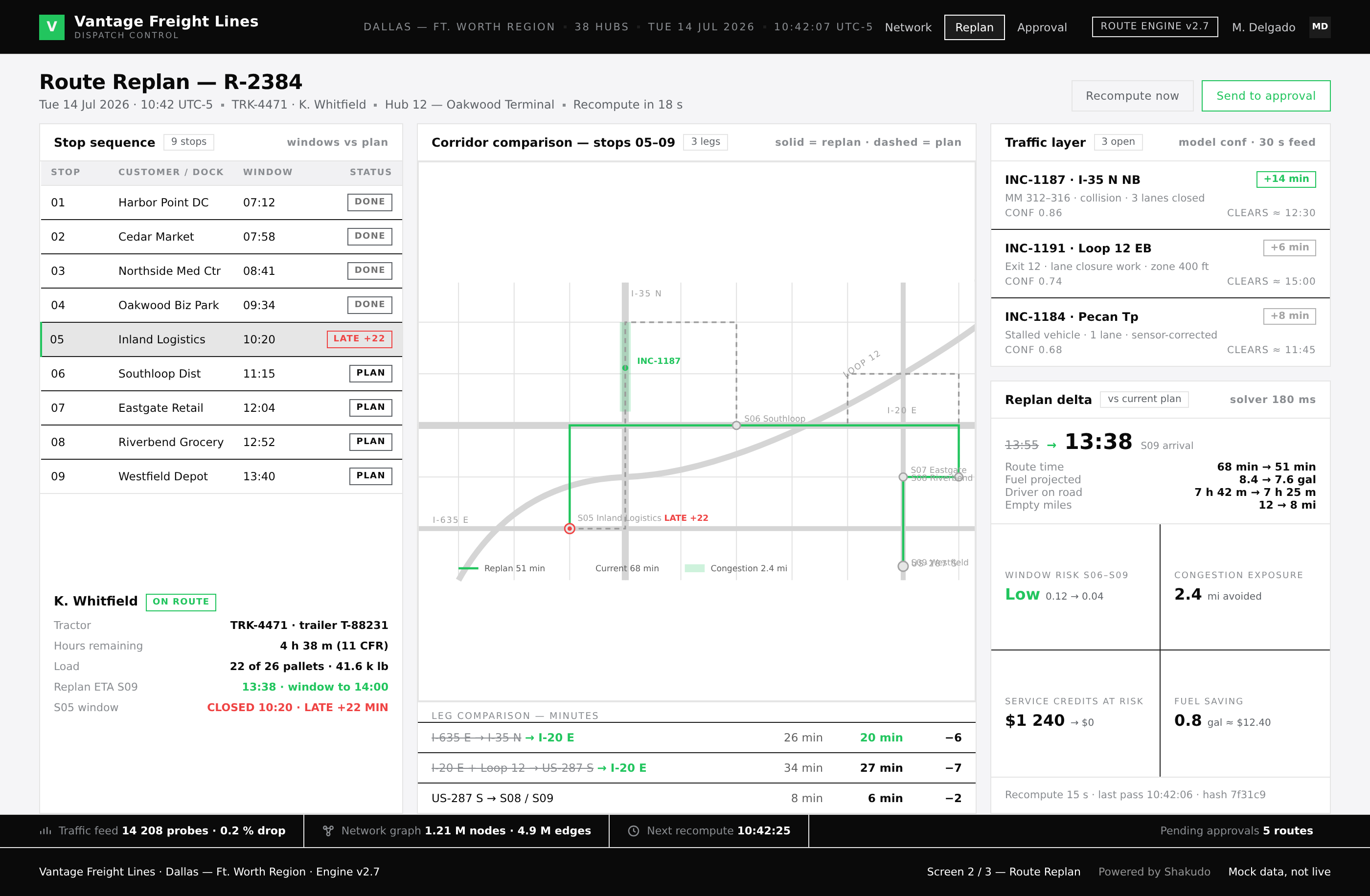
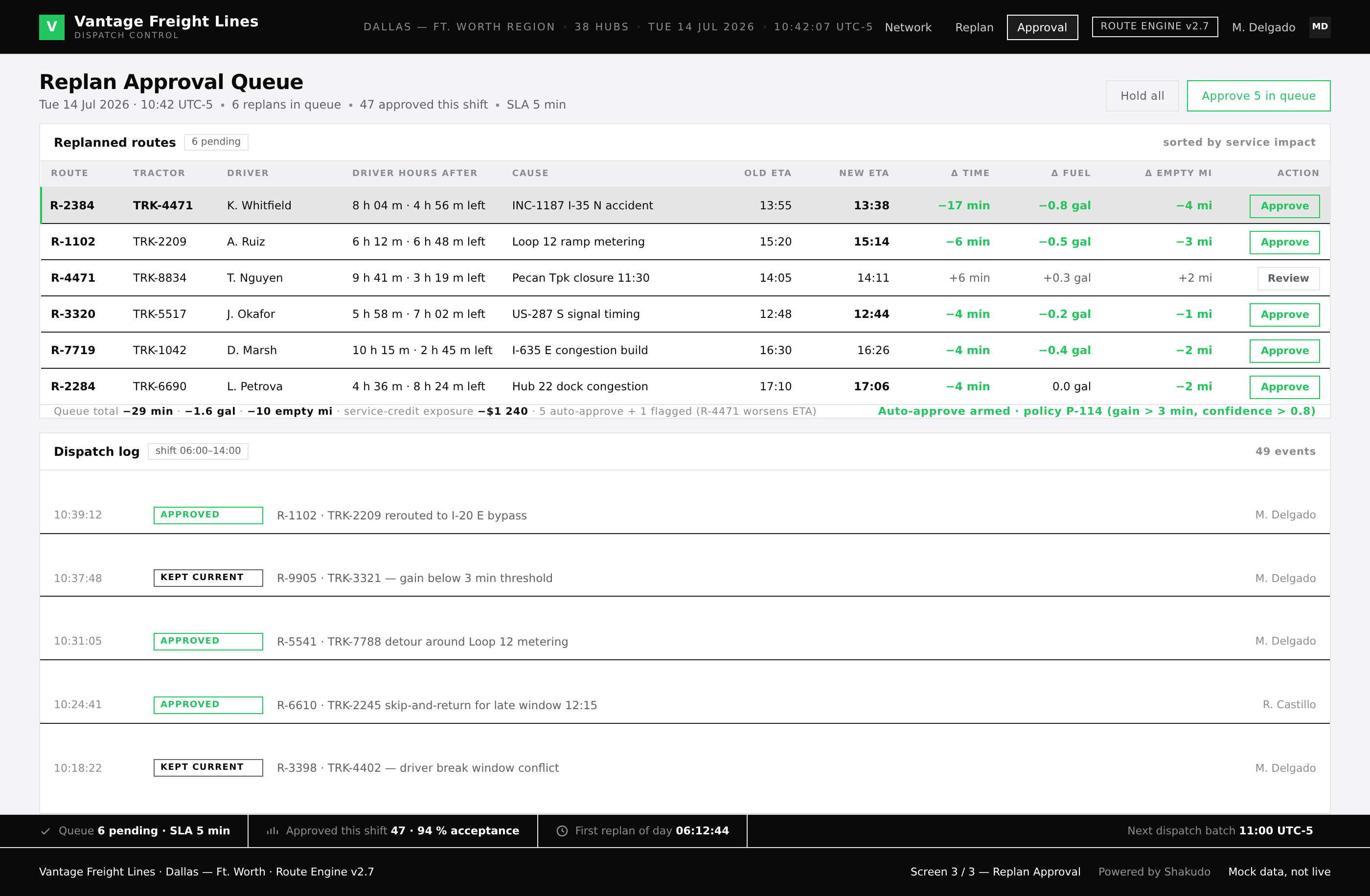
1–2 / 3
Route planning breaks the moment conditions change. A planned corridor backs up with an accident. A bridge closes. A delivery window slips. Dispatchers re-plan by hand from dashboards that lag real traffic by minutes, and every idle truck burns fuel while the driver sits in a queue. In urban freight, an hour of avoidable congestion can add ten to fifteen percent to a delivery's fuel and labor cost. Drivers follow a plan that was right an hour ago and wrong now. Each late delivery erodes customer confidence and triggers service credits that land on the bottom line. Over a full quarter, those small slippages add up to a measurable loss of on-time performance.
A better system reads live traffic, recalculates routes as conditions change, and hands drivers the best path before the next traffic wave builds. Setting up such a system traditionally requires months of integration and fine-tuning. With Shakudo, the platform deploys within days, and the fleet starts running on AI-driven logistics immediately. The dispatcher keeps the same daily rhythm, but the network does the re-planning automatically, all day long.
Shakudo deploys a real-time route optimization system that streams traffic, GPS, and order data, calculates the best route for every vehicle, and updates it as conditions change. Fuel consumption falls, delivery times tighten, and on-time performance climbs. Dispatchers stop re-planning by hand and watch the network adjust itself around congestion, closures, and shifting demand. The platform deploys in days, and the fleet benefits from the first route assignment. Route plans adapt to urban congestion, road closures, weather, and shifting demand throughout the day, and the dispatcher sees the same live view as the driver on the road.
The platform reads live traffic feeds, GPS positions, weather, and order data in one stream. Apache Flink processes that stream in real time, so the picture of the road is current to the second, and the optimizer always plans from the latest state of the network. Neo4j models the road network as a graph, and shortest-path math runs over it for every vehicle, every assignment. PyTorch models predict which corridors will congest next and how long a delay will last, so the optimizer plans around traffic that has not formed yet. The whole system runs as sovereign AI on your own infrastructure, so fleet, fuel, and customer delivery data stay in your environment, which matters for carrier contracts and customer data agreements.
Fleet operations and logistics teams at delivery, distribution, and last-mile operators that run dense urban routes, where congestion cost is a line item in the P&L. The core users are dispatchers, route planners, and the data team that supports them, all working from one live view of the network.
Apache Flink processes the live traffic stream, so routes recalculate as conditions change. The PyTorch models predict congestion before it forms, and the optimizer re-plans around it. Drivers receive the updated route before the delay builds, and the dispatcher sees the same view.
Shakudo deploys the platform within days. Traditional route optimization builds take months of integration and fine-tuning. With Shakudo, the first optimized routes go out to drivers almost immediately, and the fleet starts saving fuel and delivery time from day one.
No. The platform runs as sovereign AI on your own infrastructure. GPS traces, fuel data, and customer delivery details never leave your environment, which keeps carrier contracts and customer data agreements intact.
For fleet route optimization, that means a network that plans itself around live traffic. Book a demo and see real-time route optimization cut fuel spend and lift on-time deliveries.
Shakudo's platform revolutionizes route planning by incorporating real-time traffic analytics and AI-powered optimization algorithms. This solution processes live data from various sources, including GPS trackers, traffic cameras, and weather stations, to dynamically adjust routes for optimal efficiency. Shakudo's unique ability to rapidly deploy and scale these AI tools enables transportation and logistics companies to seamlessly integrate advanced route optimization into their existing systems.










"What drew me in is simple. When developers ship production-ready code this quickly, how can I have environments spun up fast enough? Shakudo is how we close that gap."


"Shakudo does not just provide the platform. It is a real partnership. They are always there to help and execute our vision faster and the right way. It is like a co-team working together to achieve our goals."